Who paid for what?
A transfer arrives with a half-written reference, and someone has to work out which invoice it belongs to.


Online Payments Setup
Cards, subscriptions and payment links, paid straight into your account and matched to your invoices.
How it is priced A written offer
Where the money goes Straight to your account
Who owns the account You do
Building software since 2014
Your customer pays in a few clicks. You get the money. The paperwork does itself.
On your website, from a link in an email, or on their phone.
Straight into your own account. It never passes through us.
Receipt sent, invoice marked paid, payment in your books.
What happens once online payments are set up properly. Nobody reads a bank statement, and nobody types an amount.
By card, phone or payment link, on your website, in your app or from an email.
Straight from the provider to your bank. We never hold it.
The invoice is marked paid, or created from the paid order if there was none.
The customer gets a receipt and your accounts are already up to date.
Want to be paid this way? Tell us how your customers pay today.
Getting paid should be the easy part. For many businesses it is a weekly chore of reading bank statements, chasing late payers and typing amounts into the accounts.
A transfer arrives with a half-written reference, and someone has to work out which invoice it belongs to.
Paying by bank transfer is slow and easy to forget, so money arrives weeks after the work.
Every late payer gets a personal email, written by someone who should be doing something else.
Regular customers are invoiced and chased by hand, month after month.
Tell us how your customers pay you today.
And how you would like them to pay instead. We suggest a payment provider and send you a written offer.
Pick the ways your customers already like to pay. We set up each one.
Visa, Mastercard and the rest, at checkout.
We set it upOne tap on a phone, no card to type.
We set it upSent by email or text, paid in seconds.
We set it upA pay button on every invoice you send.
We set it upSubscriptions and memberships, charged on their own.
We set it upFewer no-shows: a deposit when they book.
We set it upA card reader at the counter, in the same books.
We set it upInstalments for customers who prefer them.
We set it upFour stops, and none of them is us. Card details never touch your systems.
On your website, by link or in person.
A licensed provider handles the card and keeps it safe.
The money lands in your own account, in your name.
The payment is recorded and the invoice marked paid.
Your account, your money. We only set up the road it travels on.
A European company with a decade of building and running software for businesses. How we work.
The software, the cloud it runs on and its security, from the same people. Nothing falls between two suppliers.
The person on your first call is the person who does the work. No account managers, no handoffs.
Your data stays on European infrastructure we operate ourselves.
A payment provider, sometimes called a payment processor or payment gateway, is the company that takes a customer's card payment and sends the money to your bank. Online payment integration means we open an account with the right provider in your name and connect it to your website, your app or the software you run.
The money goes straight from your customer to you. We never hold it, never pass it through our accounts, and you can remove our access to your provider account at any time.
The part most setups leave out is what happens after the payment. We connect it to your invoices and your accounting program, so a payment is matched to its invoice without anyone checking a bank statement.
After each visit, the patient gets a payment link by email. They pay by card or phone in seconds, the money lands in the clinic's own account, and the invoice in the accounts is marked paid without anyone touching it.

Automatic reminders that stop the moment the customer pays. Nobody has to pick up the phone.
We connect your payment provider to your books, shop and customer list, so nothing is typed twice.
It pays for itself fastest when getting paid takes real time every week.
A good fit
Chasing payments every week? That is the time this gives back.
Put in your own numbers. It takes ten seconds.
Time spent on chasing and recording payments
Move the sliders to your own figures. Nothing is sent anywhere.
Every year, that is
520 hours
about 65 full working days
How much of that could a computer do? Tell us, and we answer in writing.
The same customers, the same invoices. The difference is how the money arrives and who matches it.
| Getting paid | Online payments | Bank transfer |
|---|---|---|
| How the customer pays | Card, phone or link, in seconds | Types your bank details into their bank |
| When the money arrives | When the customer pays, at the provider's payout schedule | Whenever the customer remembers |
| Matching to the invoice | Automatic | By hand, from the bank statement |
| Late payers | Reminders with a payment link go out on their own | Chased by email or phone |
| Regular customers | Charged automatically each period | Invoiced and chased each time |
Move your customers from bank transfer to online payments.
With us, yes. Work with us and we take care of everything, including payment security and the infrastructure underneath. When money is involved, security is the job, not an extra.
Customers type their card into the provider's own secure form. Your website and servers never see the card number.
Where the law asks for it, the customer confirms the payment in their banking app, which keeps stolen cards out.
When the provider tells your system a payment went through, we check the message really came from the provider.
The provider's fraud protection is turned on and set for your business, not left on its defaults.
The part of your system that handles payments runs on infrastructure we operate and secure.
If payments stop going through, we hear about it straight away, not at the end of the month.
Every payment, refund and reference is backed up, so your records are never lost.
Your team gets the rights it needs, such as issuing refunds, and nothing more.
Yes, and it is the part that saves the most admin. Payments, invoices and your accounting program are linked automatically.
When a customer pays, the invoice is made on its own, with the right details.
Every payment is matched to the invoice it belongs to. No more reading bank statements.
Unpaid invoices get a polite reminder with a payment link, on the schedule you choose.
Payments, fees and refunds land in your accounting program, ready for month end.
Want payments and accounting linked? It is part of the same setup.
Free Automation Audit
Half a day online with your team, then a written list of what is worth automating, what each fix saves and what it costs.


The provider has to approve your account, so we start that on the first day and it never holds up the rest.
The provider and payment methods your customers expect, chosen with you.
You receive: A provider and a written offer
Your account connected to your site, app or software, with pretend money first.
You receive: Test payments you can try yourself
Payments tied to orders, invoices and your accounting program.
You receive: A test month that balances itself
Switched to real payments, monitored by us, with a short guide for your team.
You receive: Paid online, on time
We build online stores with payments, stock and invoices working from day one.
The free Automation Audit looks at how you get paid today and what to fix first.
Plain-language guides from our blog, for when you want to read before you talk to anyone.
Every technical word on this page, explained in plain language in our glossary.
Payment providers and payment methods we set up, and the accounting and shop programs we connect them to.
Brand names and logos belong to their owners. Showing one means we build with it, not that the brand endorses us.
How businesses like yours get paid once it is set up.
Your industry is not here? Tell us how you get paid today.
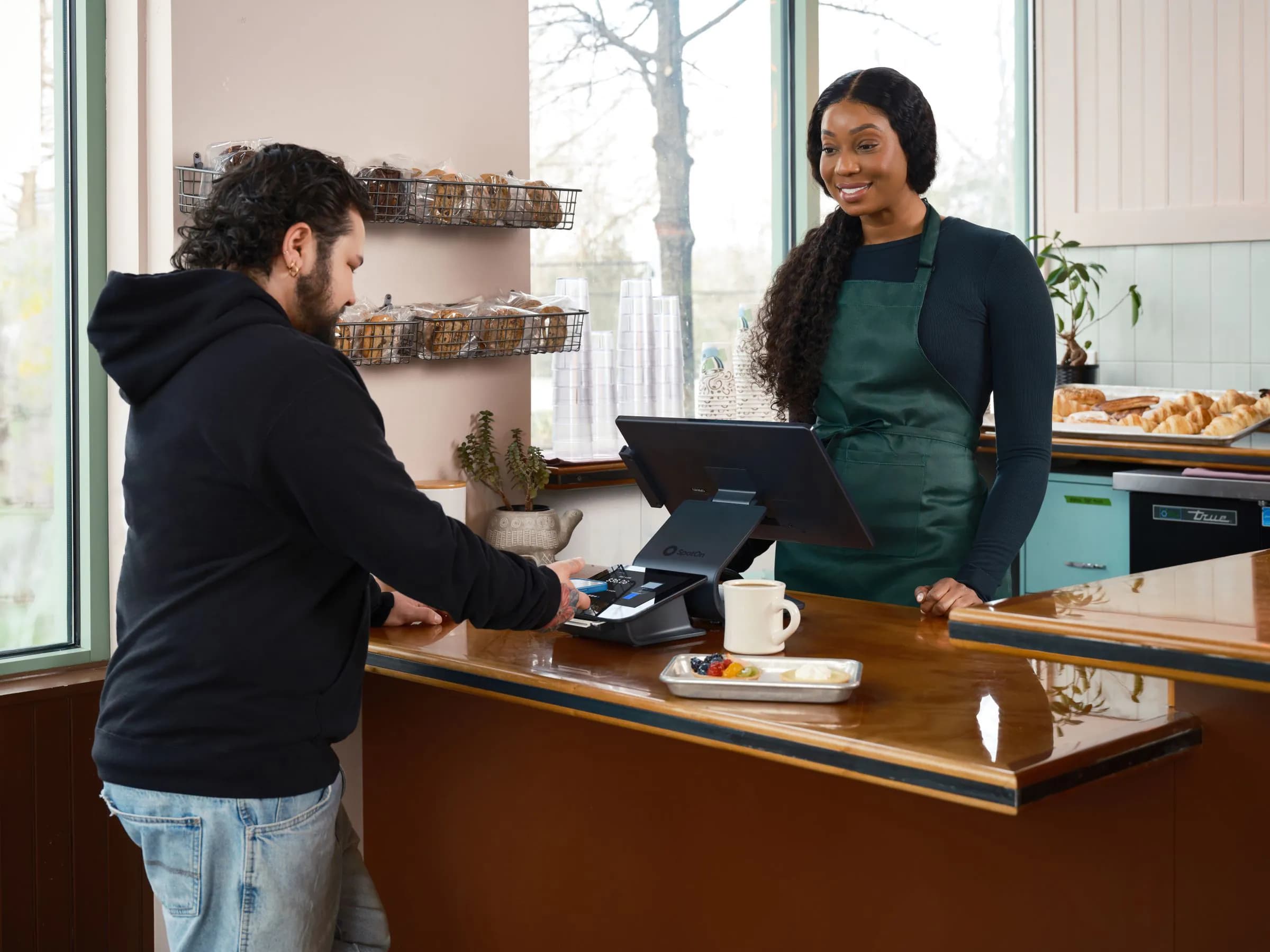
Your customers pay the way they already pay everywhere else. You stop chasing, matching and retyping.
Contacting us commits you to nothing. This is exactly what happens next.
Or book a call. A few lines about the job that takes too long is enough.
Not a salesperson, and not an automatic email: the person who would do the work.
About how the work runs today and what you want to change. No preparation needed.
What we would build and what it costs, in writing. You decide, with no obligation.
If yours is not here, ask us directly: an engineer answers, not a salesperson.
Still have a question? An engineer answers it on a short call, not a salesperson.
Pick whichever suits you. Every route reaches the same engineers.
Smaller pieces of the same work with a fixed scope, if you already know exactly what you need.
Tell us how customers pay you today. You get back a payment provider suggestion and a written offer.