
In short
- What Is Web Accessibility?. Web accessibility means designing and developing websites so that people with disabilities can perceive, understand, navigate, and interact with them effectively.
- Legal Requirements: ADA, EAA, and WCAG 2.2. In the United States, the Americans with Disabilities Act (ADA) has been interpreted by courts to apply to websites, particularly for businesses that serve the public.
- The Business Case for Accessibility. Beyond legal compliance, accessibility makes strong business sense.
- WCAG 2.2 Key Requirements. WCAG organizes its guidance around four principles, often remembered by the acronym POUR: Perceivable, Operable, Understandable, and Robust.
- Common Accessibility Mistakes. The most prevalent accessibility error on the web is missing alternative text for images.
What Is Web Accessibility?
Web accessibility means designing and developing websites so that people with disabilities can perceive, understand, navigate, and interact with them effectively. This includes individuals who are blind or have low vision, people who are deaf or hard of hearing, users with motor impairments who cannot use a mouse, and people with cognitive disabilities that affect reading comprehension or attention. Globally, over one billion people, roughly 16% of the world’s population, live with some form of disability, making accessibility a matter of reaching a significant and often underserved audience.
Accessibility is not an add-on or an afterthought. It is a fundamental quality of well-built software, on par with security, performance, and usability. When a website is accessible, it works better for everyone, but not just people with permanent disabilities. Captions help someone watching a video in a noisy environment. High-contrast text is easier to read on a phone in bright sunlight. Keyboard navigation benefits power users who prefer not to use a mouse. Accessibility improvements have a cascading effect that raises the quality of the entire experience.
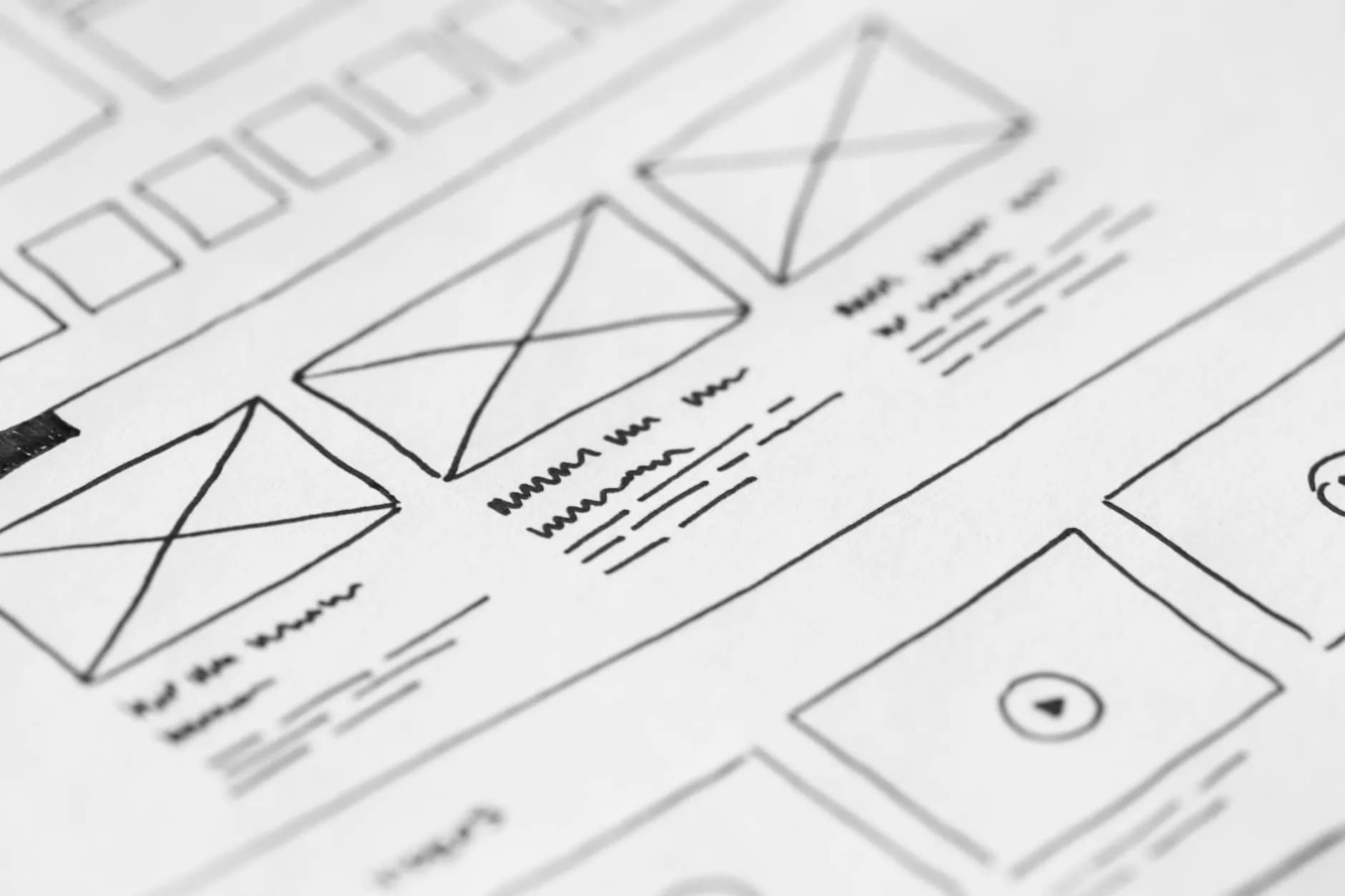
At GRADAX, we build accessibility into every website design project from the wireframing stage, not as a remediation task after launch. Retrofitting accessibility into an existing site is three to ten times more expensive than building it in from the start, and the results are rarely as smooth. Starting accessible is the only approach that makes both ethical and financial sense.
Legal Requirements: ADA, EAA, and WCAG 2.2
In the United States, the Americans with Disabilities Act (ADA) has been interpreted by courts to apply to websites, particularly for businesses that serve the public. The Department of Justice issued a final rule in April 2024 requiring state and local government websites to conform to WCAG 2.1 Level AA, and federal courts have consistently held that private businesses with a public-facing website are subject to similar obligations. ADA lawsuits targeting inaccessible websites have grown by over 300% since 2018, with settlements and judgments routinely exceeding $50,000.
In Europe, the European Accessibility Act (EAA) takes effect in June 2025, requiring a broad range of digital products and services to meet accessibility standards. This includes e-commerce platforms, banking applications, transportation booking systems, and any business selling digital services to EU consumers. Non-compliance can result in fines, product withdrawal from the market, and reputational damage. The EAA explicitly references WCAG 2.1 as the technical standard businesses should follow.
WCAG 2.2, published in October 2023, is the latest version of the Web Content Accessibility Guidelines maintained by the W3C. It introduces nine new success criteria addressing mobile accessibility, cognitive disabilities, and authentication challenges. Businesses subject to the ADA, EAA, or Section 508 should target WCAG 2.2 Level AA as the compliance baseline. Level A addresses the most critical barriers, Level AA covers the majority of user needs, and Level AAA represents the gold standard but is often impractical to achieve across an entire site.

The Business Case for Accessibility
Beyond legal compliance, accessibility makes strong business sense. The global spending power of people with disabilities and their families exceeds $13 trillion annually, according to the Return on Disability Group. Accessible websites also tend to rank better in search engines because many accessibility best practices, semantic HTML, descriptive alt text, logical heading hierarchies, and clean link text, are also SEO best practices. Google’s algorithms reward structured, well-labeled content, which is exactly what accessible markup provides.
Accessible sites also convert better. A study by the Click-Away Pound Survey found that 71% of users with disabilities will leave a website that is difficult to use, and 82% of them would spend more if the experience were accessible. Improving form labels, error messages, and navigation clarity benefits all users, not just those with disabilities. Our clients in healthcare and medical verticals see particularly strong returns from accessibility investments because their audiences include elderly patients and caregivers who rely on assistive technologies.
Accessibility also future-proofs your investment. As regulations expand and enforcement intensifies, businesses that build accessible products today avoid costly remediation tomorrow. It is significantly cheaper to maintain accessibility as a continuous practice than to undergo periodic audits and emergency fixes.
WCAG 2.2 Key Requirements
WCAG organizes its guidance around four principles, often remembered by the acronym POUR: Perceivable, Operable, Understandable, and Robust. Perceivable means all content must be presentable to users in ways they can perceive, images need alt text, videos need captions, and color alone must never be the only way to convey information. Operable means all functionality must be accessible via keyboard, users must have enough time to read and use content, and nothing should cause seizures or physical discomfort. Understandable means text must be readable, pages must behave predictably, and forms must help users avoid and correct errors. Robust means content must be compatible with current and future assistive technologies.
WCAG 2.2 adds several important criteria. Dragging movements must have single-pointer alternatives, so a user who cannot perform a drag gesture can still reorder items or move sliders. Target size for interactive elements must be at least 24 by 24 CSS pixels, preventing the frustration of tiny tap targets on mobile devices. Consistent help mechanisms, like a support chat or contact link, must appear in the same relative location across pages. Focus appearance requires that keyboard focus indicators meet minimum contrast and size thresholds so users can always see where they are on the page.
For web applications with complex interfaces like dashboards, data tables, and drag-and-drop interactions, WCAG compliance requires careful attention to ARIA roles, live regions, and focus management. A sortable table needs aria-sort attributes. A notification toast needs role="alert". A modal dialog needs to trap focus and return it to the trigger element on close. These details are easy to miss but critical for screen reader users.
Common Accessibility Mistakes
The most prevalent accessibility error on the web is missing alternative text for images. WebAIM’s annual survey of the top one million websites found that 54% of all detected errors were missing alt text, empty links, or missing form labels. These are not edge cases, they are the most basic requirements of accessible markup, and they affect every screen reader user who visits your site. Decorative images should use alt="" (empty alt) to be skipped by screen readers, while informative images should use concise, descriptive alt text.
Low color contrast is the second most common issue. WCAG requires a minimum contrast ratio of 4.5:1 for normal text and 3:1 for large text. Many popular design trends, light gray text on white backgrounds, pastel colors, and thin font weights, fail these thresholds. Tools like the WebAIM Contrast Checker or Chrome DevTools’ built-in contrast analyzer make it trivial to verify compliance. There is no excuse for shipping text that users cannot read.
Another frequent mistake is relying on color alone to convey meaning. A form field that turns red to indicate an error is invisible to a colorblind user unless accompanied by an icon, text label, or pattern change. Status indicators that use only green, yellow, and red are meaningless to the 8% of men and 0.5% of women with red-green color vision deficiency. Always pair color with a secondary indicator like shape, text, or iconography.
How to Audit Your Site
An accessibility audit combines automated scanning with manual testing to identify barriers across your site. Start with automated tools: WAVE, axe DevTools, and Lighthouse’s accessibility audit can catch approximately 30% to 40% of WCAG violations automatically. These tools flag missing alt text, insufficient contrast, empty buttons, and missing form labels in seconds. Run them on every unique page template, not just the homepage.
Manual testing covers the issues automation cannot detect. Navigate your entire site using only a keyboard . Tab to move forward, Shift+Tab to move backward, Enter to activate, and Escape to close. Every interactive element should be reachable, visually focused, and operable without a mouse. Then test with a screen reader: VoiceOver on Mac, NVDA on Windows, or TalkBack on Android. Listen to how your pages are announced and note anywhere the experience is confusing, repetitive, or incomplete.
For a comprehensive audit, involve users with disabilities. No amount of technical testing replaces the insight of someone who relies on assistive technology daily. Recruit three to five participants with different disabilities, blind, low vision, motor impairment, cognitive disability, and observe them completing key tasks on your site. The issues they uncover are almost always different from what automated tools flag, and they are almost always more important.
Building Accessibility into Design
Accessibility starts in the design phase, not the development phase. Designers should verify color contrast ratios before finalizing their palette, define focus states for every interactive element alongside hover states, and ensure touch targets meet the 44 by 44 pixel minimum recommended by Apple’s Human Interface Guidelines (or WCAG 2.2’s 24 by 24 CSS pixel requirement at minimum). Typography choices matter too, body text below 16 pixels is difficult for many users to read, and line heights below 1.5 reduce readability for people with dyslexia.
Information architecture plays a significant role in cognitive accessibility. Pages should follow a logical heading hierarchy (h1, h2, h3) that allows screen reader users to navigate by heading level. Navigation menus should be consistent across pages. Error messages should appear near the element that caused the error, not in a generic banner at the top of the page. Form fields should always have visible labels, never relying solely on placeholder text, which disappears when the user begins typing.
Design systems are the most effective tool for institutionalizing accessibility. When your button component has built-in focus styles, your input component has built-in label association, and your modal component has built-in focus trapping, accessibility becomes the default rather than an opt-in behavior. Every component in the GRADAX design system meets WCAG 2.2 Level AA, so our developers never have to think about baseline accessibility, it is baked into the building blocks they assemble from.
Tools, Testing, and Next Steps
The accessibility tooling landscape has matured significantly. For automated scanning, axe-core (the engine behind axe DevTools) is the industry standard, with integrations for every major testing framework. For continuous monitoring, tools like Siteimprove, Deque, and Tenon provide dashboards that track compliance across your entire domain over time. For design-stage validation, Stark and Polypane offer contrast checkers and vision simulators built directly into the design tool.
Automated testing in your CI/CD pipeline ensures accessibility does not regress. Tools like axe-playwright and jest-axe run accessibility checks as part of your test suite, failing the build if new violations are introduced. This shifts accessibility left in the development process, catching issues before they reach production rather than after a user complains or a lawyer sends a demand letter.
Accessibility is not a one-time project, it is a continuous practice. Every new page, feature, and content update is an opportunity to introduce or eliminate barriers. Build accessibility into your quality assurance checklist, train your content editors to write descriptive alt text and semantic headings, and budget for periodic manual audits by specialists. If you want to understand where your site stands today and what it would take to reach WCAG 2.2 Level AA, contact our team for a comprehensive accessibility assessment.