
E-commerce para el comercio minorista: cómo las tiendas físicas venden online
Llevar tu tienda física online no significa abandonar la ubicación física. Cómo construir una estrategia minorista omnicanal.
Equipo de Marketing · 5 de febrero de 2026
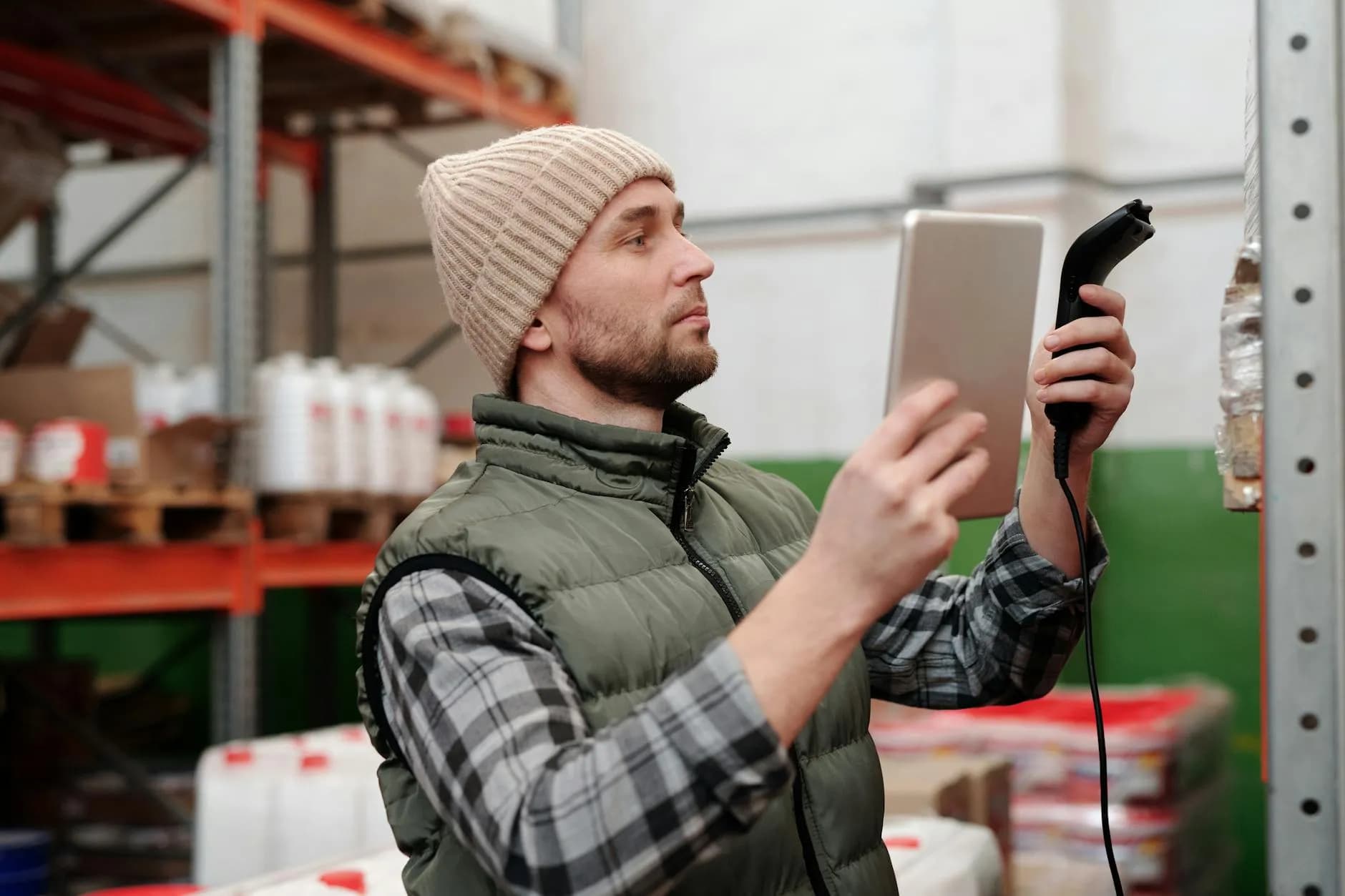
Foto de Kampus Production · Pexels
Why Brick-and-Mortar Needs E-Commerce
The line between physical retail and online shopping has dissolved. Consumers no longer think of these as separate channels — they expect to browse online and pick up in store, return online purchases at a physical location, and check in-store availability from their phone while standing in a competitor's aisle. Retailers who treat their website as a secondary channel are watching revenue walk out the door. A 2025 study by the National Retail Federation found that omnichannel shoppers spend 30% more per transaction than single-channel shoppers and have a 23% higher repeat purchase rate.
The hesitation we hear most from retail clients is that e-commerce will cannibalize their in-store sales. The opposite is true. According to a 2024 Harvard Business Review analysis of omnichannel retail, when a brick-and-mortar retailer launches an online store, in-store traffic typically increases by 12-18% within the first year because the website becomes a discovery engine that introduces the brand to customers who would never have walked through the physical door. Online visibility creates offline foot traffic, this is not theory, it is a pattern we have observed across dozens of retail clients.
The pandemic accelerated e-commerce adoption by roughly five years, and consumer behavior has not reverted. Even the most loyal in-store shoppers now expect to check product availability, compare options, and read reviews online before visiting. A retailer without an e-commerce presence is invisible to these consumers during the research phase, which means they are invisible at the most decisive moment in the purchase journey. The question is no longer whether to sell online, it is how to do it in a way that strengthens rather than fragments the brand experience.
Choosing the Right Platform
Platform selection is the most consequential decision in any e-commerce project because migration costs are enormous and switching penalties are real. The three platforms we recommend most for brick-and-mortar retailers going online are Shopify, WooCommerce, and custom headless builds. Each serves a different profile, and choosing wrong creates years of friction.
Shopify is our default recommendation for retailers with fewer than 5,000 SKUs who want to launch quickly and operate with minimal technical overhead. It handles payment processing, hosting, security, and PCI compliance out of the box, which lets the retailer focus on merchandising and marketing rather than infrastructure. We customize Shopify themes to match the retailer's physical brand identity and integrate their existing POS system for unified inventory management. The total cost of ownership is predictable, which matters enormously for small businesses managing cash flow carefully.
For retailers with complex requirements, tens of thousands of SKUs, custom pricing tiers, B2B and B2C on the same platform, or deep integration with existing ERP systems, we build custom e-commerce solutions using headless architecture. The frontend is decoupled from the commerce engine, which allows us to create exactly the shopping experience the brand needs without being constrained by template limitations. The tradeoff is higher upfront investment and ongoing development costs, but for retailers doing seven figures or more in annual online revenue, the performance and conversion gains justify the investment many times over.
Inventory Management Across Channels
Inventory synchronization is the unglamorous backbone of omnichannel retail, and getting it wrong creates the worst possible customer experience: selling a product online that is not actually available. Overselling erodes trust instantly and generates costly customer service interactions, refund processing, and negative reviews. Yet accurate real-time inventory is surprisingly difficult to achieve when products exist simultaneously on a retail floor, in a back stockroom, in a warehouse, and on a website.
We solve this with a centralized inventory management system that serves as the single source of truth for all channels. The physical store's POS system, the e-commerce platform, and any marketplace integrations like Amazon or Etsy all read from and write to the same inventory pool. When a customer buys the last unit of a product in-store, the online listing updates within 60 seconds. When an online order reserves a unit, the in-store count adjusts immediately. Safety stock thresholds can be configured per channel to prevent overselling during high-velocity periods.
The technical implementation depends on the retailer's existing systems. For Shopify-based stores with Square or Shopify POS in the physical location, native integrations handle most synchronization automatically. For retailers with legacy POS systems or ERP platforms, we build middleware that translates between systems and handles conflict resolution when simultaneous transactions create race conditions. We have built these integrations for everything from single-location boutiques to 30-store regional chains, and the architecture scales with clear patterns at each stage.
Local Delivery and Fulfillment
Fulfillment is where brick-and-mortar retailers have a genuine competitive advantage over pure e-commerce players. Amazon can promise two-day shipping; you can promise same-day delivery within a 15-mile radius, one-hour curbside pickup, or ship-from-store with no minimum order. These options are not just convenient, they are brand differentiators that justify premium pricing and build the kind of loyalty that free shipping from a faceless warehouse never will.
We build checkout experiences that present fulfillment options dynamically based on the customer's location and the product's availability. If a customer is within the delivery zone and the product is in stock at their nearest location, same-day delivery appears as the default option. If they are outside the zone, standard shipping is presented with an estimated arrival date. Buy-online-pick-up-in-store always appears when the product is available locally, because BOPIS orders have a 30-40% attach rate — customers who come in to pick up an online order frequently buy additional items.
For retailers who want to offer local delivery without managing their own drivers, we integrate with last-mile delivery services like DoorDash Drive, Uber Direct, or regional courier networks. The customer sees a smooth branded delivery experience; behind the scenes, the order is dispatched to a delivery partner who picks it up from the store and drops it at the customer's door. We have helped retailers launch local delivery programs that achieved profitability within 60 days by charging a delivery fee that covers the courier cost while still undercutting Amazon's delivery speed by hours.
Online-to-Offline Strategies
The most sophisticated omnichannel retailers use their website to drive in-store traffic deliberately, not just as a fallback when online conversion fails. Store locator pages optimized for local search, in-store event promotion, appointment booking for personal shopping or consultations, and exclusive in-store-only offers announced online all create reasons for digital visitors to become physical visitors. And physical visitors convert at 5-10x the rate of online visitors for most retail categories.
One strategy that consistently performs well for our clients is the "browse online, experience in store" model. The website serves as a full product catalog with rich descriptions, comparison tools, and customer reviews, but key product categories include prompts like "See it in person at our Midtown location" or "Book a fitting appointment." This works particularly well for high-consideration purchases like furniture, jewelry, and specialty apparel where tactile experience matters. The website does the education; the store does the closing.
We also build digital loyalty programs that bridge the online-offline gap. Points earned in-store can be redeemed online and vice versa. Purchase history from both channels is unified in a single customer profile, enabling personalized recommendations whether the customer is browsing the website or speaking with a sales associate who can pull up their history on a tablet. These unified experiences require tight technical integration, but they create customer relationships that pure-play retailers cannot match. Digital advertising that drives customers into this unified ecosystem delivers significantly higher lifetime value than campaigns that target a single channel.
Product Photography and Descriptions
In physical retail, customers can pick up a product, feel its weight, examine its texture, and compare it side by side with alternatives. Online, they have only your photographs and descriptions. Skimping on product content is the single most common mistake brick-and-mortar retailers make when launching e-commerce, because they are accustomed to letting the product sell itself on the shelf. Online, every pixel of every image and every word of every description is doing the selling.
We recommend a minimum of five images per product: a hero shot on a clean background, a lifestyle image showing the product in context, two detail shots highlighting material and craftsmanship, and a scale reference image. For apparel, include multiple angles and at least one on-model shot. For home goods, include room-setting images. Product videos increase conversion rates by 20-30% for products over $50, even a simple 15-second clip showing the product from multiple angles outperforms static images alone.
Product descriptions should address three audiences simultaneously: the customer scanning for key specifications, the customer looking for a reason to buy, and the search engine looking for relevant keywords. We structure descriptions with a compelling opening sentence that captures the product's value proposition, a bullet-point specifications section for scanners, and a narrative paragraph that paints a picture of ownership. Each description naturally incorporates category and product-type keywords without sacrificing readability. For retailers with hundreds of products, we establish description templates and train staff to populate them consistently.
Marketing for Hybrid Retail
Marketing an omnichannel retail business requires a unified strategy that reinforces the same brand message across digital and physical touchpoints. Email campaigns should promote both online exclusives and in-store events. Social media should feature behind-the-scenes content from the physical store alongside product shots and customer reviews. Paid advertising should use location targeting to drive both website traffic and store visits depending on the customer's proximity and intent signals.
Google's Local Inventory Ads are particularly powerful for hybrid retailers. These ads show nearby shoppers that your store has a specific product in stock right now, with distance and directions. They combine the convenience of online search with the immediacy of local availability. Our clients who run Local Inventory Ads alongside standard Shopping campaigns see a 25-40% increase in overall return on ad spend because in-store conversion rates are dramatically higher than online rates for the same products.
Email marketing remains the highest-ROI channel for retail, returning an average of $36 for every dollar spent. We build segmented email programs that differentiate between online-only customers, in-store-only customers, and omnichannel customers, delivering tailored content to each. Abandoned cart emails recover 8-12% of lost online revenue. Post-purchase follow-ups drive repeat purchases and reviews. And seasonal campaigns timed to local events and weather patterns outperform generic promotional calendars. Contact us to build a marketing strategy that treats your physical and digital presence as one unified brand experience.
Measuring Omnichannel Success
Traditional e-commerce metrics, conversion rate, average order value, revenue per visit, tell only half the story for omnichannel retailers. A customer who browses 12 products on your website, adds nothing to cart, and then drives to your store to purchase $400 worth of merchandise looks like a bounce in your analytics and a success in your cash register. Without attribution that connects online behavior to offline purchases, you will systematically undervalue your digital marketing investment and underinvest in the website that is actually driving your business.
We implement cross-channel attribution using a combination of loyalty program data, email receipt matching, and Google's store visit conversions. When a customer uses the same email for online browsing and in-store purchases, their journey is unified in the analytics platform. Google's store visit conversions use location data from opted-in users to estimate how many people who clicked your ads subsequently visited your physical store. While no attribution model is perfect, the combination of these signals gives retailers a directionally accurate picture of their true digital ROI.
The KPIs we track for omnichannel retailers go beyond channel-specific metrics. We measure customer lifetime value across all channels, cross-channel shopping frequency, BOPIS adoption rate and associated attach rate, local delivery satisfaction scores, and unified inventory accuracy. Monthly reports compare online revenue, in-store revenue, and hybrid revenue, revenue from transactions that touched both channels, to identify where the flywheel is spinning fastest. Retailers who embrace this holistic measurement framework consistently make better investment decisions and grow faster than those who silo their channel analytics.
¿Listo para hacer crecer tu negocio online?
Habla con nuestro equipo sobre tu proyecto. Consulta gratuita, sin compromiso.
Consulta Gratuita