
Marketing de vídeo para pequenas empresas: por onde começar em 2026
O vídeo é o formato de conteúdo com maior engajamento em qualquer plataforma. Aqui está um guia prático para começar com marketing de vídeo com qualquer orçamento.
Equipe de Marketing · 24 de fevereiro de 2026
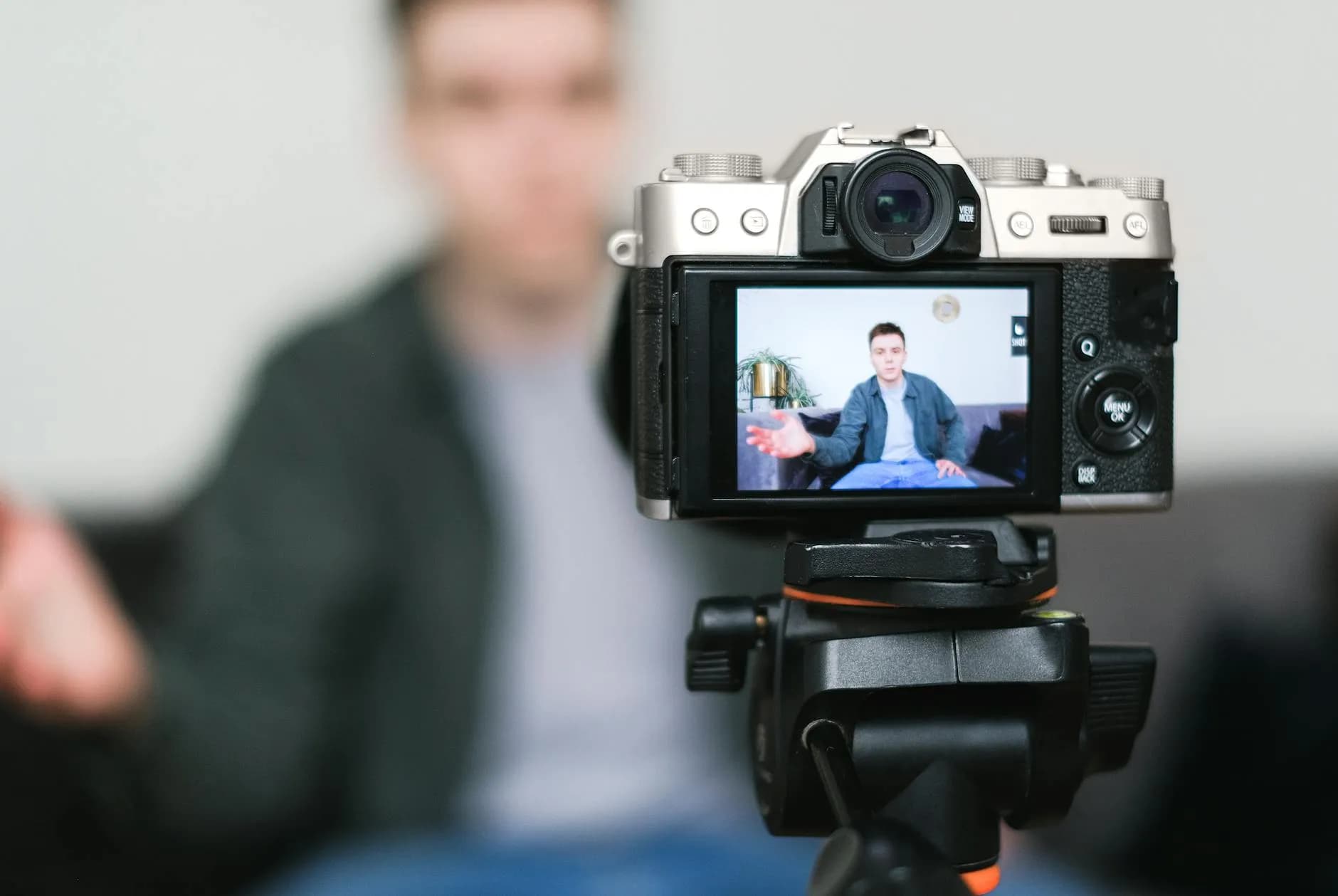
Foto de George Milton · Pexels
Why Video Dominates in 2026
Video is no longer an optional marketing channel — it is the dominant format for online content consumption. In 2026, video accounts for over 82% of all internet traffic, and platforms across the board are prioritizing video content in their algorithms. Instagram's Reels receive 2.3 times more engagement than static image posts. LinkedIn video posts generate 5 times more engagement than text-only updates. Google increasingly features video results in standard search queries, with video carousels appearing in over 26% of search results pages. The shift is unmistakable, and businesses that fail to adapt are leaving visibility and revenue on the table.
For small businesses specifically, the barriers to professional video production have collapsed. Smartphones released since 2024 shoot 4K video with cinematic stabilization. Free editing apps like CapCut and DaVinci Resolve offer capabilities that required thousand-dollar software suites five years ago. AI-powered tools can generate captions, translate audio, remove backgrounds, and even create b-roll footage from text prompts. The democratization of video production means that a solo entrepreneur can produce content that competes visually with brands spending six figures on production budgets.
The consumer expectation has also shifted. Today's buyers, across every demographic, prefer video over text for learning about products and services. A recent survey found that 89% of consumers say watching a video convinced them to purchase a product or service. Among B2B buyers, 72% watch video content before making purchasing decisions. If your competitors are producing video content and you are not, you are conceding a significant portion of your addressable audience to them. The question is no longer whether to invest in video, but how to start efficiently and effectively.
Video Types That Work for Small Businesses
Not all video formats require the same investment, and small businesses should start with types that deliver the highest return for the lowest production effort. Explainer videos, short clips that describe what your business does and who it serves, are foundational. A 60 to 90 second explainer on your homepage can increase conversion rates by 20% or more because it communicates your value proposition faster and more memorably than text. Customer testimonial videos are another high-impact format: a genuine customer describing their positive experience on camera builds trust more effectively than any written review.
Behind-the-scenes content humanizes your brand and builds emotional connection with your audience. A restaurant owner walking viewers through the morning prep routine, a craftsperson showing how a product is made, or a consultant sharing a day-in-the-life vlog, these formats require minimal editing and feel authentic precisely because they are not polished. Tutorial and how-to videos demonstrate expertise and provide genuine value, positioning your business as a trusted authority. A landscaping company that teaches viewers how to maintain their lawn between service visits is building trust that translates into customer loyalty.
FAQ videos address common customer questions in an engaging format that serves double duty as content marketing and customer service. Product demonstration videos show your offerings in action, reducing purchase anxiety for potential buyers. Live videos on Instagram, Facebook, or LinkedIn create real-time engagement opportunities that algorithms heavily favor. At GRADAX, we help clients identify which video types align best with their business model and audience, then build a production plan that maximizes output with realistic resource constraints.
Equipment and Budget Guide
The minimum viable equipment for professional-quality business video is surprisingly accessible. A modern smartphone (iPhone 15 or later, Samsung Galaxy S24 or later, or Google Pixel 8 or later) provides excellent video quality. A clip-on lavalier microphone ($20 to $40) dramatically improves audio quality, which is the single biggest factor in perceived video professionalism. A basic ring light or LED panel ($30 to $60) ensures consistent, flattering lighting. A simple tripod or phone mount ($15 to $25) eliminates shaky footage. Total investment: under $120 for a setup that produces broadcast-quality results.
If you are ready to invest more, a mid-range setup adds a dedicated camera with a larger sensor for superior low-light performance and depth-of-field control ($500 to $800 for cameras like the Sony ZV-E10 or Canon EOS R50), a wireless microphone system ($100 to $200), a two-light softbox kit ($80 to $150), and a quality tripod ($80 to $150). This setup costs $760 to $1,300 and produces results indistinguishable from content created by professional production studios. The quality jump from smartphone to dedicated camera is noticeable but not nearly as impactful as the jump from no microphone to a decent microphone.
Software costs can be zero. DaVinci Resolve is a professional-grade video editor available for free. CapCut is excellent for short-form social content. Canva's video editor handles simple projects with drag-and-drop ease. For AI-enhanced workflows, tools like Descript allow text-based video editing and automatic transcription for around $24 per month. The biggest investment is not equipment or software, it is time. Plan to spend four to eight hours per week on video creation if you are producing two to three pieces of content weekly, which is the minimum cadence we recommend for building audience momentum.
Platform Strategy: YouTube, Instagram, TikTok
Each video platform serves a different audience and business objective, and your strategy should reflect those differences rather than posting identical content everywhere. YouTube is a search engine first and a social platform second. People come to YouTube with intent, they want to learn something, solve a problem, or research a purchase. Longer, more detailed videos (5 to 20 minutes) perform best on YouTube, and the platform's recommendation algorithm rewards watch time and session duration. For small businesses, YouTube is ideal for tutorials, product reviews, detailed explainers, and educational content that establishes authority.
Instagram Reels and TikTok are discovery platforms where content reaches people who are not actively looking for you. These platforms excel at brand awareness and top-of-funnel engagement through short-form video (15 to 90 seconds). The algorithms favor content velocity, posting frequently increases your chances of a video reaching a broader audience. Authenticity outperforms polish on these platforms; content that feels native and personal consistently outperforms content that looks like a corporate advertisement. Social media management that incorporates platform-specific video strategies drives significantly more engagement than a one-size-fits-all approach.
LinkedIn video is an underutilized channel for B2B businesses and professional services. Video posts on LinkedIn receive 5x the engagement of text posts and are prioritized in the feed algorithm. Thought leadership videos, industry insight clips, and team culture showcases perform exceptionally well. The professional context of LinkedIn means that even simple talking-head videos, a founder sharing a business lesson, a consultant breaking down an industry trend — generate meaningful engagement and lead generation. At GRADAX, we recommend that B2B clients allocate at least 30% of their video production effort to LinkedIn-specific content.
Video SEO Basics
Creating great video content is only half the equation, you also need to ensure it is discoverable. Video SEO encompasses the practices that help your videos rank in YouTube search, Google video results, and platform-specific recommendation algorithms. On YouTube, the three most important ranking factors are click-through rate (driven by your thumbnail and title), watch time (driven by content quality and pacing), and engagement signals (likes, comments, shares, and subscribes). Optimizing for these factors requires deliberate attention to every element surrounding your video content.
Title optimization follows similar principles to web page SEO: include your target keyword naturally, front-load the most important words, and keep titles under 60 characters to prevent truncation. Write descriptions that are at least 200 words, naturally incorporating relevant keywords and including timestamps for longer videos. Use tags (on YouTube) to reinforce topical relevance. Create custom thumbnails for every video, they are the single biggest influence on click-through rate. Thumbnails with clear text overlays, high contrast, and expressive human faces consistently outperform generic or auto-generated alternatives.
Transcripts and closed captions are both an accessibility requirement and an SEO advantage. YouTube's algorithm can read captions to better understand your video's content, and Google can index transcript text for standard web search. Upload accurate transcripts rather than relying on auto-generated captions, which average 80 to 85% accuracy and can misrepresent your content. Embedding videos on your website with proper Video schema markup (using VideoObject structured data) enables your videos to appear in Google's video search results and carousels, creating additional discovery paths beyond YouTube itself.
Repurposing Video Content
The highest-ROI video strategy is one where every video you produce generates multiple content assets across different channels. A single 10-minute YouTube video can be repurposed into four to six short-form clips for Instagram Reels and TikTok, a blog post derived from the transcript, an email newsletter topic, several social media quote graphics, and an audio-only version for podcast distribution. This multiplication effect means that your four-to-eight-hour weekly video production investment yields content for every channel without creating each piece from scratch.
Start with long-form content and work down. Record a detailed YouTube video or live stream on a topic relevant to your audience. Extract the most engaging 30 to 60 second segments for short-form platforms. Transcribe the full video and edit the transcript into a blog post, adding internal links, headers, and images to optimize it for web search. Pull key quotes and statistics for social media posts. This workflow aligns with an effective content marketing strategy where a single content creation session feeds your entire marketing ecosystem for a week or more.
At GRADAX, we build content repurposing workflows for our clients that maximize output while minimizing production time. We use AI transcription tools to generate first drafts of blog posts from video content, then edit for readability and SEO optimization. We use automated clip detection to identify the most engaging moments in long-form videos for short-form distribution. We create content calendars that ensure repurposed assets are distributed at optimal times across each platform. This systematic approach typically triples a client's content output without increasing their production hours.
Measuring Video ROI
Measuring video marketing ROI requires tracking metrics across the entire funnel, from awareness to conversion. Top-of-funnel metrics include views, impressions, reach, and new audience growth. Mid-funnel metrics include watch time, engagement rate (likes, comments, shares), click-through rate, and website traffic driven by video. Bottom-of-funnel metrics include leads generated, conversions attributed to video touchpoints, and revenue from customers who engaged with video content during their buyer journey. Each metric layer tells a different story about video's contribution to your business.
Attribution is the biggest challenge in video ROI measurement. A prospect might discover your brand through a TikTok video, watch three YouTube tutorials over the following weeks, visit your website from a link in a video description, and finally convert after receiving an email with an embedded product demo. Simple last-click attribution would credit the email, but the video content initiated and nurtured the entire journey. At GRADAX, we implement multi-touch attribution models that account for video's role across the full customer journey, giving our clients an accurate picture of video's true revenue impact.
For small businesses just starting with video, we recommend tracking three core metrics: cost per video (including production time valued at your hourly rate plus any direct costs), traffic driven to your website from video sources, and conversions from video-attributed visitors. Digital advertising campaigns that incorporate video typically see 30% to 50% lower cost per acquisition than campaigns using static images alone, providing a clear benchmark for evaluating your organic video efforts. Start simple, measure consistently, and expand your tracking as your video program matures.
Getting Started This Week
If you have been putting off video marketing, here is a practical plan to get your first videos published within seven days. Day one: identify your top five frequently asked customer questions and your three most popular products or services. These are your first video topics. Day two: set up your filming environment, a quiet space with natural or artificial lighting, your smartphone on a tripod, and a clip-on microphone. Day three: script and record your first two videos. Keep them under three minutes each. Do not aim for perfection, aim for clarity and authenticity.
Days four and five: edit your videos using a free tool like CapCut or DaVinci Resolve. Add captions (essential, 85% of social media video is watched without sound), a simple intro title, and a call to action at the end. Day six: upload your first video to YouTube with an optimized title, description, and custom thumbnail. Extract a 30 to 60 second highlight clip and post it to Instagram Reels or TikTok. Day seven: embed the YouTube video on a relevant page of your website with a short introduction paragraph. Congratulations, you are now a business that does video marketing.
The most important thing is to start and maintain consistency. Your first videos will not be your best, and that is fine. Every successful video creator looks back at their early content with a mix of embarrassment and pride. The businesses that win with video are not the ones with the best equipment or the slickest production, they are the ones that show up consistently, learn from each video's performance data, and steadily improve their craft. At GRADAX, we help clients build sustainable social media and video strategies that grow with their business. Contact us to discuss how video marketing can work for your specific goals, audience, and budget.
Pronto para expandir o seu negócio online?
Fale com a nossa equipa sobre o seu projeto. Consulta gratuita, sem compromisso.
Consulta Gratuita