Guia de marketing digital para salões de beleza e spas
Redes sociais, reserva online e SEO local são essenciais para negócios de beleza. Aqui está o plano completo de marketing digital para salões e spas.
Equipe de Marketing · 27 de janeiro de 2026
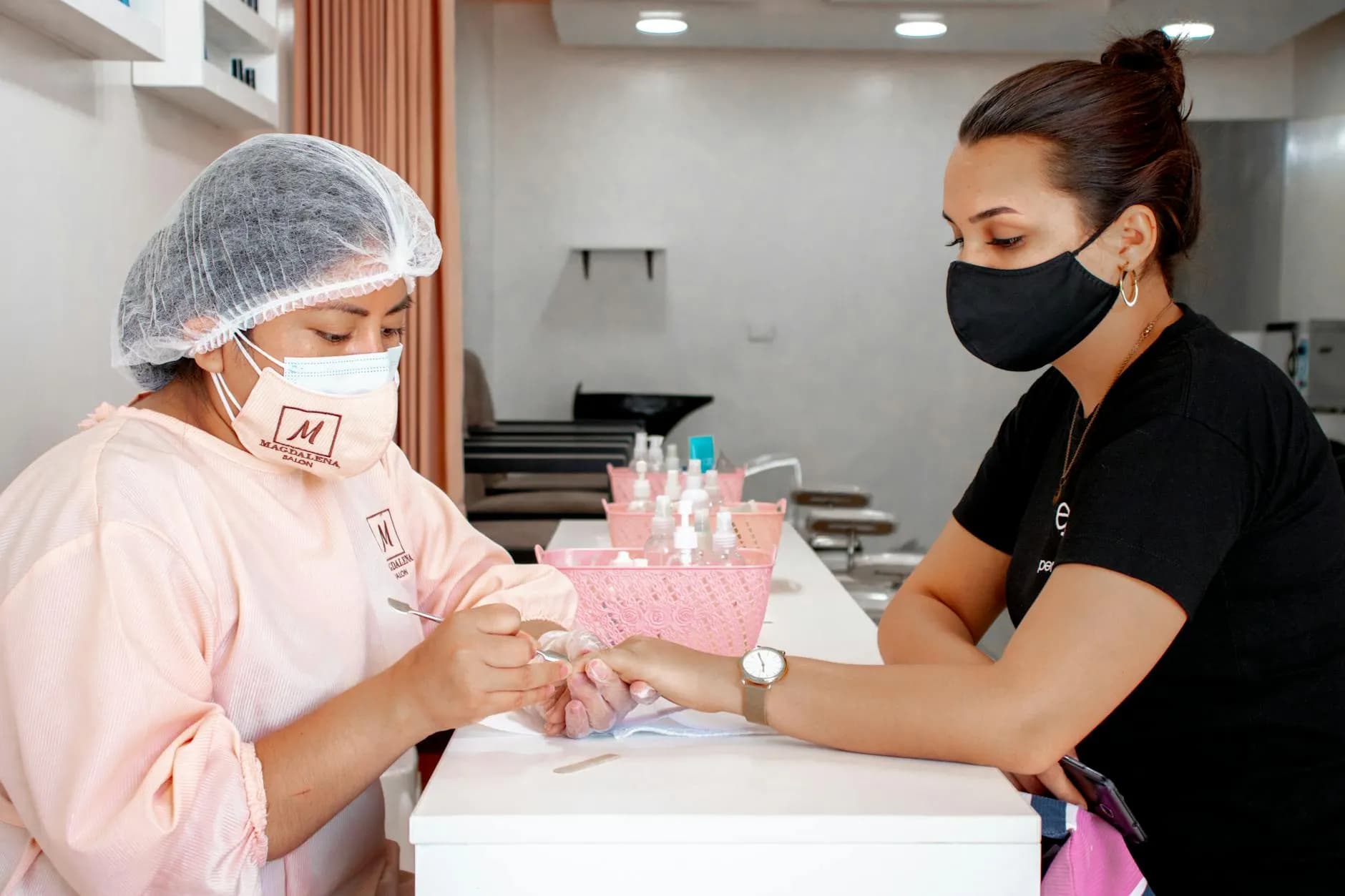
Foto de Kampus Production · Pexels
The Beauty Industry’s Digital Landscape
The beauty and wellness industry has always been driven by personal connections and word-of-mouth referrals, but the way those connections form has fundamentally changed. In 2026, Instagram, TikTok, and Google are the new word-of-mouth. A 2025 Booking.com Beauty Trends report found that 82% of consumers discover new salons and spas through social media, and 63% will not book an appointment without first checking the business’s Instagram profile. Your digital presence is no longer supplementary to your physical location — it is the primary channel through which new clients find and evaluate your business.
The beauty industry is uniquely suited to digital marketing because the product is inherently visual. A perfectly blended balayage, a flawless set of lash extensions, or a serene spa environment photograph beautifully and perform exceptionally well on visual platforms. Salons and spas that consistently share high-quality images and videos of their work generate a self-reinforcing marketing engine: great content attracts followers, followers become clients, clients become content sources through before-and-after transformations, and the cycle continues.
Yet most beauty salons leave significant revenue on the table by approaching digital marketing haphazardly, posting irregularly, ignoring reviews, running a website that has not been updated since its launch, or investing nothing in local search optimization. The salons and spas that dominate their local markets have a deliberate, multi-channel strategy that covers social media, search, reviews, email, and paid advertising. This guide walks through each component in detail.
Instagram and TikTok Strategy
Instagram remains the single most important marketing platform for beauty businesses, but TikTok is closing the gap rapidly, particularly among clients under 35. Your Instagram strategy should center on three content pillars: transformation content (before-and-after photos and videos), educational content (styling tips, product recommendations, routine advice), and behind-the-scenes content (team culture, salon atmosphere, day-in-the-life). This mix showcases your skills, provides value to followers, and builds the personal connection that drives bookings.
Reels and TikToks are the highest-reach content formats on both platforms, with short-form video receiving 2x to 5x more impressions than static posts. A 30-second hair transformation Reel showing the before, the process, and the reveal set to trending audio is the single most effective content type for beauty businesses. Film these consistently, aim for three to five Reels per week, and use relevant hashtags, location tags, and trending sounds to maximize discoverability. Collaborate with your social media management team to establish a content calendar that maintains consistency even during busy periods.
Stories deserve equal attention, even though they disappear after 24 hours. Stories are where your existing followers engage most deeply, and they are the format best suited for real-time interaction: polls about new products, Q&A sessions about treatment options, swipe-up links to booking pages, and countdown stickers for promotions. Save your best Stories to themed Highlights on your profile, organize them by service type (Hair, Nails, Facials, Spa), and include a highlight for Reviews and one for Pricing or Specials. New profile visitors check Highlights before scrolling your grid, making them a critical decision-making tool.
Website Essentials for Salons
Your salon’s website is the conversion engine that turns social media followers and Google searchers into booked appointments. While Instagram is where clients discover you, your website is where they make the decision to book. Every element of your salon website should reduce the distance between “I’m interested” and “I’m booked.” The most important element is a prominent booking button visible on every page, ideally in the header navigation and as a sticky element on mobile.
Service pages are where most salon websites fall short. A page that lists “Haircuts, $45-$85” tells the client nothing about what differentiates your haircuts from the salon down the street. Each service category needs its own page with descriptions that convey the experience, not just the outcome. Explain your consultation process, the products you use and why, the expected appointment duration, and what clients should do to prepare. Include starting prices but note that final pricing depends on consultation, this avoids sticker shock while setting accurate expectations.
A gallery page showcasing your team’s best work is essential, but organize it thoughtfully. Categorize images by service type and, where applicable, by hair type, skin type, or style category. A prospective client searching for “balayage for dark hair” should be able to find relevant examples on your site in seconds. Each image should include a brief caption noting the service performed and the stylist who did the work. This gallery also feeds your SEO strategy, alt text on gallery images targeting local search terms drives image search traffic that competitors miss.
Online Booking Integration
Online booking is the most critical feature for salon and spa websites. Clients who cannot book online in the moment they decide to try your salon will often book with a competitor who offers that convenience instead. The 2025 Zenoti Salon Technology Report found that salons with online booking see 32% more new client appointments than those limited to phone booking, and 45% of online bookings occur outside of business hours when no one is available to answer the phone.
Choose a booking platform that integrates with your existing point-of-sale and scheduling system. Platforms like Vagaro, Fresha, Boulevard, and GlossGenius are purpose-built for beauty businesses, offering features like service-specific booking flows, stylist selection, automated confirmations and reminders, intake forms, and integrated payment processing. The booking widget should embed directly into your website, not redirect clients to a third-party domain, every redirect is a potential drop-off point.
Reduce no-shows by implementing a deposit or card-on-file policy, clearly communicated during the booking process. Salons that require a card on file or a deposit of 20% to 50% for services over $100 see no-show rates drop from an industry average of 15% to under 5%. Combine this with automated text and email reminders at 48 hours and 2 hours before the appointment. The slight friction of providing payment information is far outweighed by the revenue recovered from eliminated no-shows.
Google Business Profile Optimization
When a potential client searches “hair salon near me” or “best spa in [city],” your Google Business Profile determines whether your business appears in the Local Pack results that dominate the top of the search page. Optimizing your profile is the single most impactful local SEO activity for beauty businesses, and it costs nothing. Start with the fundamentals: verify your listing, ensure your business name matches your signage and website exactly, confirm your address and phone number, and set accurate hours including holiday schedules.
Category selection is more nuanced than it appears. Your primary category should be your core business type — “Beauty Salon,” “Hair Salon,” “Day Spa,” or “Nail Salon”, but Google allows up to ten additional categories. Add every relevant secondary category: “Hair Extensions Service,” “Waxing Service,” “Facial Spa,” “Massage Therapist,” “Eyelash Salon.” Each category expands the searches your profile is eligible to appear in. Upload at least 25 photos and update them monthly with recent work, seasonal decor changes, and new team members.
Google Posts are an underutilized feature that keeps your profile fresh and gives you additional opportunities to rank. Post weekly updates about seasonal promotions, new services, team spotlights, or beauty tips. Each post appears on your profile for seven days before archiving, and posts with images receive 3x more engagement than text-only posts. Include a call-to-action button on every post, “Book Now,” “Learn More,” or “Call Now”, to convert profile viewers into booked clients.
Review Management
Reviews are the lifeblood of beauty business marketing. A single half-star difference in rating can shift 9% of revenue from a lower-rated salon to a higher-rated competitor, according to Harvard Business School research. More importantly, the recency and volume of reviews matter as much as the rating itself. A salon with a 4.9-star average but no reviews in the past three months looks abandoned to prospective clients, while a salon with a 4.6-star average and ten reviews from the past month looks active and trusted.
Build a review generation system that runs automatically. The most effective trigger point is immediately after the client pays, when satisfaction is highest. Train your front desk team to mention reviews during checkout: “We’d love to hear about your experience, you’ll get a quick link by text in a few minutes.” Then send an automated text with a direct Google review link. Platforms like Podium and Birdeye integrate with salon POS systems to automate this entirely. Target a minimum of ten new reviews per month to maintain ranking momentum.
Negative reviews are inevitable, and how you handle them defines your brand. Respond within 24 hours with empathy, accountability, and a resolution offer. Never be defensive, never blame the client, and never reveal personal details about the service. A response like “We’re sorry your experience didn’t meet the standard we set for ourselves. We’d love the chance to make this right, please call us directly at [number] so we can discuss how to resolve this” demonstrates professionalism. Prospective clients reading reviews pay more attention to how businesses respond to criticism than to the criticism itself.
Email and SMS Marketing
Email and SMS marketing are the most cost-effective retention tools for beauty businesses, yet the majority of salons collect client email addresses and never use them. A monthly email newsletter featuring seasonal service promotions, styling tips, product spotlights, and team news keeps your salon top-of-mind between appointments. The average beauty industry email open rate is 28%, and salons that send consistent monthly emails see 18% higher rebooking rates than those that do not communicate between visits.
SMS marketing delivers even higher engagement, with open rates exceeding 95% and response rates 8x higher than email. Use SMS strategically for time-sensitive communications: appointment reminders, last-minute cancellation fill requests, flash sales, and birthday offers. A text that says “Hi Sarah, we had a cancellation tomorrow at 2 PM for a blowout with Jessica. Would you like to grab the spot? Reply YES to book” fills gaps in your schedule while making the client feel valued. Always obtain explicit opt-in consent for SMS marketing and include an opt-out mechanism in every message.
Segmentation transforms generic blasts into personalized communications that drive action. Segment your client database by service type (hair clients vs. spa clients vs. nail clients), visit frequency (weekly, monthly, lapsed), and spending level. A client who regularly books keratin treatments should receive a different promotional offer than one who comes in quarterly for a basic trim. This level of personalization is achievable with most modern salon software and dramatically outperforms one-size-fits-all messaging.
Seasonal Promotions That Work
The beauty industry operates on a clear seasonal calendar, and your promotional strategy should align with it. January is resolution season, promote skin care packages, detox facials, and “new year, new look” hair transformation specials. February targets Valentine’s Day with couples spa packages and gift card promotions. Spring brings prom, graduation, and wedding season, all of which drive group bookings for hair, makeup, and nail services. Summer focuses on protective treatments, color maintenance, and vacation prep. Fall introduces cozy, restorative services. And the holiday season from November through December is the highest-revenue period for gift cards and party-prep packages.
The most effective promotional format for beauty businesses is the bundled package that creates value without discounting individual services. Instead of offering 20% off a haircut, which trains clients to wait for sales, create a “Summer Refresh Package” that bundles a cut, color gloss, and deep conditioning treatment at a price slightly below the sum of the individual services. Packages increase average transaction value while giving clients a reason to try services they would not have booked independently. Price packages at the $150 to $300 range, where they feel special enough to be an event but accessible enough for impulse booking.
Promote seasonal offerings across every channel simultaneously: email announcement two weeks before launch, Instagram Reels and Stories showcasing the package, a Google Post on your Business Profile, a homepage banner on your website, and in-salon signage and counter cards. Consistency across channels creates the impression of a major event rather than a quiet offer. Track redemption by channel to understand which platforms drive the most bookings, and reinvest in those channels for the next season. If you are ready to build a year-round digital marketing engine for your salon or spa, schedule a strategy call with our team and we will create a custom plan for your business.
Pronto para expandir o seu negócio online?
Fale com a nossa equipa sobre o seu projeto. Consulta gratuita, sem compromisso.
Consulta Gratuita