
Niezbędniki strony restauracji: czego każdy właściciel potrzebuje
Strona Twojej restauracji powinna ułatwiać przeglądanie menu, rezerwację stolika i zamawianie jedzenia. Oto funkcje, które naprawdę generują przychody.
Zespół marketingu · 9 lutego 2026
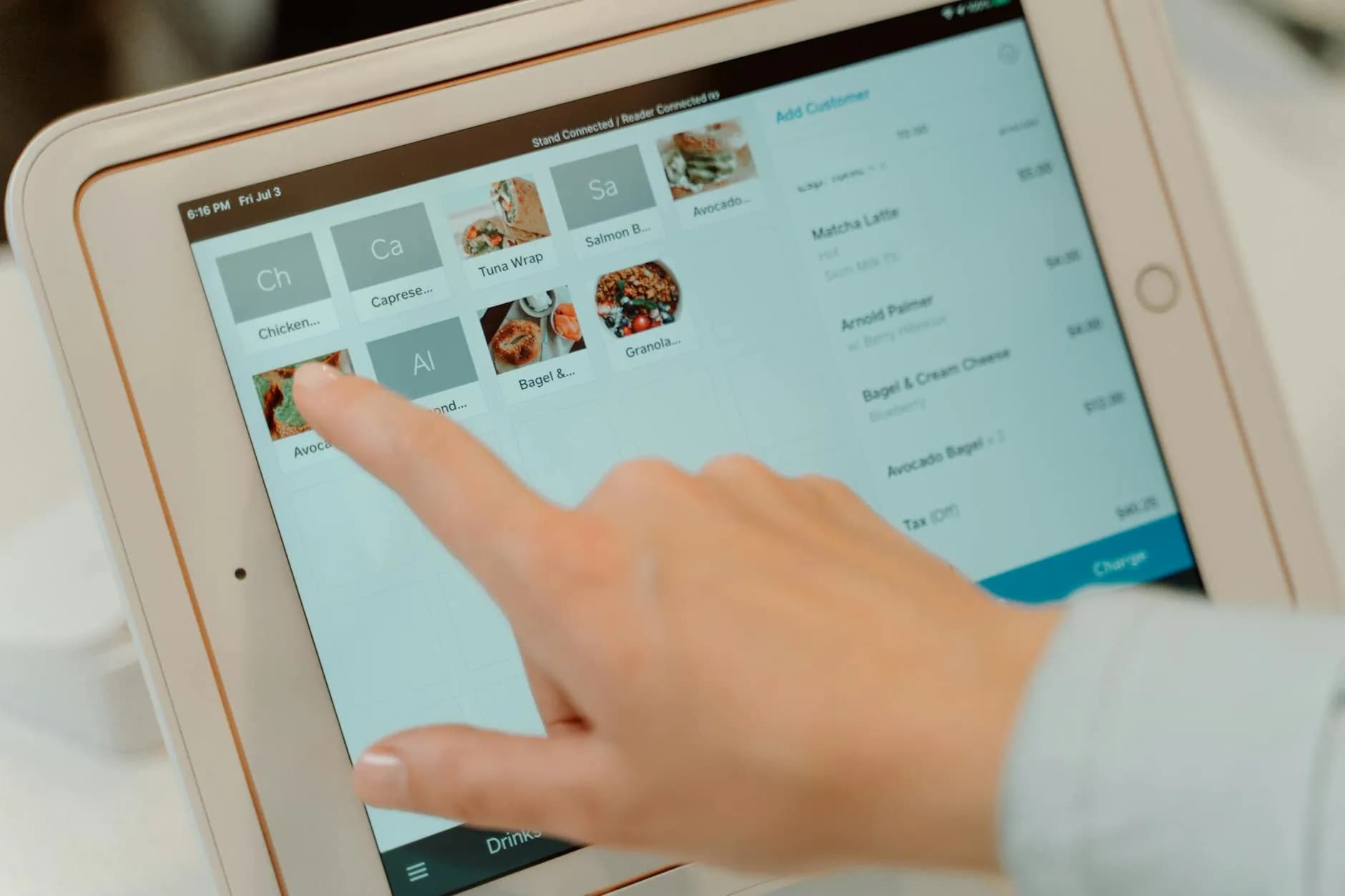
Zdjęcie autorstwa ELEVATE · Pexels
Why Your Restaurant Needs a Great Website
In the restaurant industry, your website is your digital front door. Before a customer ever walks through your physical entrance, smells the food, or meets your staff, they have already formed an opinion about your restaurant based on what they found online. A 2025 TouchBistro survey found that 77% of diners visit a restaurant's website before deciding to eat there. If your site is slow, outdated, or — worst of all, nonexistent, you are losing customers to competitors who made a better first impression.
Many restaurant owners assume that a strong presence on Yelp, Google, or DoorDash eliminates the need for a dedicated website. This is a costly misconception. Third-party platforms control your listing, can change their algorithms overnight, and charge fees that eat into your margins. Your own website is the only digital property you fully control. It is where you set the narrative, showcase your brand personality, and convert browsers into diners without paying a commission on every transaction.
The restaurants we work with at GRADAX consistently see measurable results after launching a properly built website. One restaurant and hospitality client saw online reservation requests increase by 340% within 90 days of launching their new site. Another saw their Google search visibility double after we implemented structured data markup and location-specific content. Your website is not a brochure, it is a revenue engine, and it deserves the same attention you give to your menu and dining room.
Online Menu: Not a PDF
If there is one mistake that undermines more restaurant websites than any other, it is publishing the menu as a PDF. It seems logical, you already have the PDF from your print menu, but it creates a terrible user experience and actively hurts your search rankings. PDFs are difficult to read on mobile devices, requiring pinching and zooming. They load slowly on cellular connections. And critically, Google cannot efficiently index the text inside a PDF the way it indexes HTML content, which means your carefully crafted menu descriptions are invisible to search engines.
Your menu should be built as native HTML on your website, fully responsive and easily readable on any device. Each menu section should be a clearly formatted part of the page with item names, descriptions, and prices displayed in a clean, scannable layout. High-quality photography alongside menu items increases order value by an average of 27%, according to a study by Grubhub. Even if you cannot photograph every dish, featuring images of your signature items and seasonal specials creates visual appeal that a text-only menu cannot match.
An HTML menu also enables structured data markup, a technical optimization that helps Google understand your menu content and display it directly in search results. When someone searches for "best seafood pasta near me," restaurants with structured menu data are more likely to appear with rich snippets showing relevant menu items, prices, and ratings. We build all restaurant websites with schema.org menu markup as a standard feature because the SEO value is significant and the implementation cost is minimal.
Online Ordering and Reservations
Online ordering is no longer a pandemic convenience, it is a permanent consumer expectation. The National Restaurant Association reports that 67% of restaurant revenue growth in 2024 came from off-premise channels including delivery, takeout, and catering orders placed online. If your website does not offer a simple ordering experience, you are routing those customers to third-party platforms that charge 15 to 30 percent commissions on every order.
The best restaurant websites integrate ordering directly into the site experience. A customer browsing your menu should be able to add items to a cart and check out without leaving your domain or opening a separate app. Platforms like Square Online, ChowNow, and Toast offer embeddable ordering widgets that integrate with your point-of-sale system, giving you direct customer relationships and data while handling payment processing and order management. We help our restaurant clients evaluate these platforms and integrate the best fit into their website design without compromising the brand experience.
For dine-in restaurants, online reservations are equally critical. A prominent "Reserve a Table" button should appear on every page of your website, linked to your reservation system of choice, whether that is OpenTable, Resy, or a direct booking form. Make the process require as few clicks as possible: date, time, party size, and contact information. Every additional field or step reduces completion rates. We have measured a 22% increase in reservation completions for clients who simplified their booking flow from five steps to three.
Mobile-First Design
Mobile is not secondary for restaurant websites, it is primary. Over 72% of restaurant website traffic comes from mobile devices, and the percentage is even higher for searches with local intent like "restaurants near me" or "pizza delivery open now." If your website was designed desktop-first with mobile as an afterthought, the experience your most common visitors encounter is the worst version of your site.
Mobile-first design means starting the design process with the smallest screen and scaling up, not the other way around. Navigation must be thumb-friendly with large tap targets. Your phone number should be a clickable link that initiates a call with a single tap. Your address should link to Google Maps or Apple Maps for instant directions. The menu should load immediately without requiring horizontal scrolling, and ordering or reservation buttons should be persistently visible without scrolling. Every fraction of a second matters . Google research shows that 53% of mobile users abandon sites that take longer than three seconds to load.
We build every restaurant website on a mobile-first responsive framework that delivers exceptional experiences across all devices. Core content, menu, hours, location, and ordering — loads first with images optimized and lazy-loaded to minimize bandwidth consumption. The result is fast, intuitive sites that convert hungry browsers into paying customers regardless of what device they are using. Our restaurant clients consistently see mobile bounce rates 35 to 40 percent lower than industry averages after launching with our mobile-first approach.
Google Business Profile Integration
Your Google Business Profile is arguably the most important digital asset your restaurant has outside of your own website, and the two should work together closely. When someone searches for your restaurant by name or discovers it through a local search, your Google Business Profile is often the first thing they see, sometimes the only thing, if they get all the information they need without clicking through to your site. Keeping this profile accurate, complete, and compelling is essential.
At minimum, your profile must have accurate hours for every day of the week, including holiday hours updated in advance. Your menu should be uploaded and kept current. Your category should be as specific as possible, "Italian Restaurant" performs better than just "Restaurant." Photos should be high quality and updated regularly; Google reports that businesses with photos receive 42% more requests for directions and 35% more click-throughs to their websites. Post weekly updates about specials, events, or seasonal menu changes to signal to Google that your business is active and engaged.
Your website and Google Business Profile should reinforce each other. Your website's NAP information must match your profile exactly. Add a Google Maps embed to your contact page. Link to your profile's review page from your website to encourage reviews. Implement local business structured data on your website that mirrors your profile information. This consistency signals to Google that your business information is trustworthy, which directly influences your ranking in the local map pack, the prime real estate that captures the majority of clicks for local searches.
Photography That Sells
In the restaurant industry, photography is not decoration, it is salesmanship. The difference between a professionally photographed dish and a phone snapshot can be the difference between a customer choosing your restaurant or scrolling past it. Studies consistently show that high-quality food photography increases online order values by 25 to 30 percent and significantly improves click-through rates from search results and social media.
Invest in a professional food photography session at least once per year, timed to coincide with a major menu update. A skilled food photographer understands lighting, plating, and angles in ways that produce images far superior to even the best smartphone photos. Budget for 20 to 30 hero shots that cover your signature dishes, appetizers, desserts, beverages, and the dining atmosphere. These images will serve as the visual foundation of your website, social media, Google Business Profile, and any advertising you run throughout the year.
Between professional sessions, train your staff to capture consistent casual photography for social media and website updates. Establish a simple shooting setup, a well-lit corner with a clean background, and basic guidelines for composition. Use natural light whenever possible, shoot from a 45-degree angle for plated dishes, and from directly above for flat items like pizzas and grain bowls. Even casual photos should maintain a consistent style that reinforces your brand identity. We provide photography guidelines to all our restaurant website clients as part of our onboarding process.
Reviews and Social Proof
Social proof is the most powerful persuasion tool available to restaurants, and your website should use it aggressively. When a potential customer is deciding between your restaurant and a competitor, a curated collection of genuine five-star reviews displayed prominently on your homepage can be the tipping point. Do not bury testimonials on a dedicated reviews page that nobody visits, weave them throughout your site where they support the decision to dine with you.
Display your Google rating and review count prominently near the top of your homepage. Feature three to five of your best written reviews with the reviewer's first name and the date. If you have notable press coverage or awards, create a dedicated accolades section. For multi-location restaurants, show location-specific reviews on each location page. The key is authenticity, visitors can spot fabricated reviews instantly, and the backlash from fake reviews can damage your reputation far more than a few imperfect genuine ones.
Actively manage your review ecosystem by responding to every review on Google, Yelp, and TripAdvisor within 24 hours. Thank positive reviewers specifically, mentioning the dish or experience they highlighted. Address negative reviews professionally, apologize for shortcomings, and invite the reviewer to give you another chance. This responsiveness signals to both algorithms and humans that you care about your customers' experiences. Restaurants that respond to more than 75% of their reviews see an average rating increase of 0.3 stars over six months, which translates directly into more clicks, more reservations, and more revenue.
Local SEO for Restaurants
Restaurant discovery is overwhelmingly local. Ninety-two percent of restaurant-related searches have local intent, which means local SEO is not optional, it is the primary driver of organic visibility for your business. Ranking in the top three results for searches like "best brunch near me" or "Thai restaurant downtown" can generate dozens of new customers per week without spending a dollar on advertising.
Beyond Google Business Profile optimization, local restaurant SEO requires location-specific content on your website. If you have multiple locations, each one needs a dedicated page with its own address, hours, phone number, menu variations, and unique descriptive content. For single-location restaurants, create content that naturally incorporates your neighborhood, city, and nearby landmarks. A blog post about "The Best Date Night Restaurants in [Your Neighborhood]" that includes your own restaurant alongside local favorites signals geographic relevance to search engines while providing genuine value to readers.
Technical SEO foundations matter just as much for restaurants as for any other business. Ensure your site loads in under three seconds, uses HTTPS, renders properly on mobile, and includes local business schema markup. Build citations on restaurant-specific directories like TripAdvisor, Zomato, and AllMenus in addition to general directories. Earn local backlinks by participating in community events, sponsoring local organizations, and building relationships with food bloggers in your area. These signals compound over time and can help a new restaurant website reach the first page of local search results within three to six months. If you are ready to build a restaurant website that drives real business results, get in touch with our team for a free consultation.
Gotowy do rozwoju swojego biznesu online?
Porozmawiaj z naszym zespołem o swoim projekcie. Bezpłatna konsultacja, bez zobowiązań.
Bezpłatna Konsultacja