Wie du dich von einem Google Core Update erholst (Wiederherstellungsleitfaden)
Ein Google Core Update hat deine Rankings getroffen. Keine Panik. Hier ist ein systematischer Wiederherstellungsleitfaden basierend auf echten Fällen, die wir für Kunden betreut haben.
Marketing-Team · 26. Februar 2026
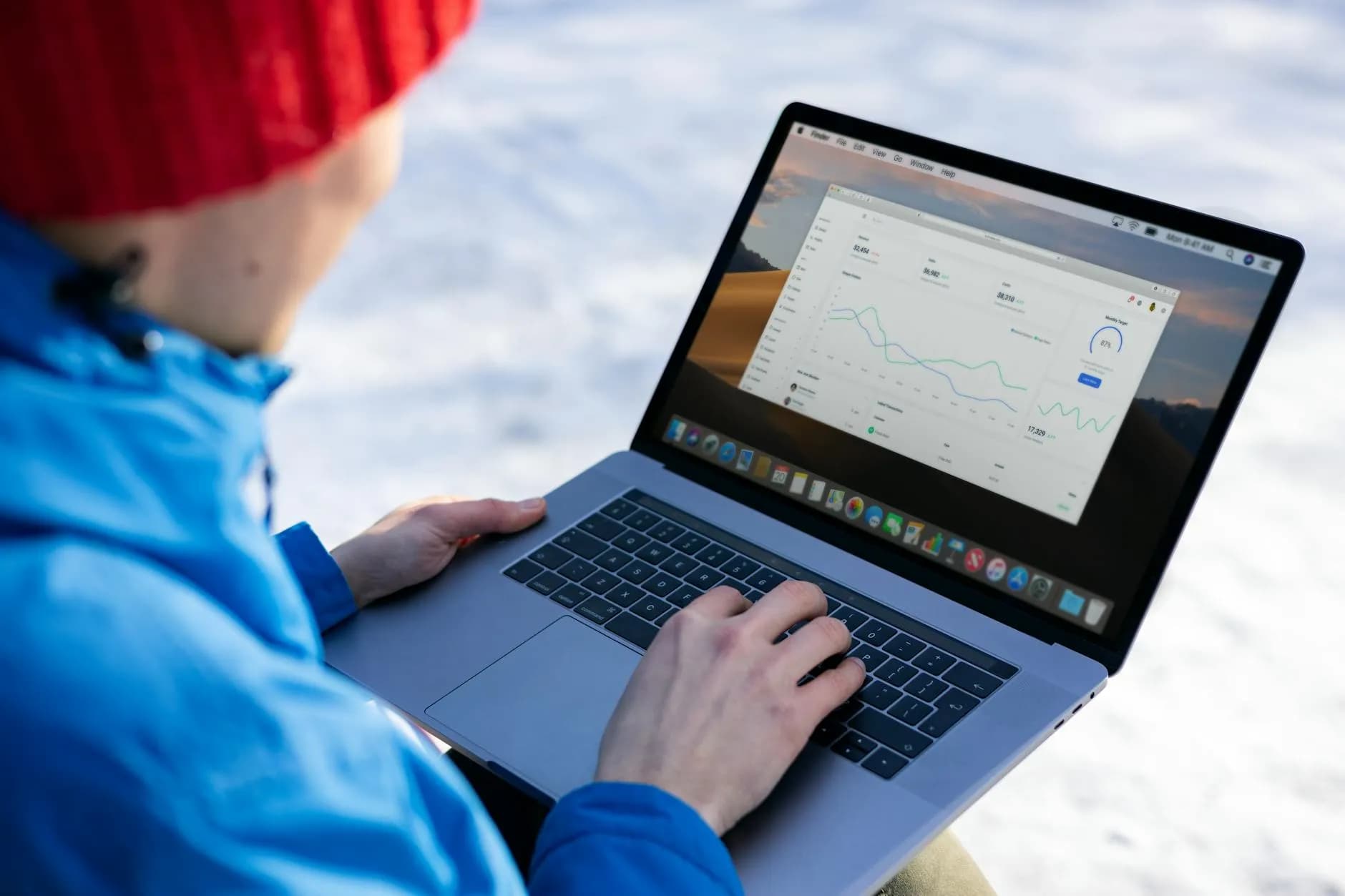
Foto von Lukas · Pexels
What Are Google Core Updates
Google rolls out thousands of algorithm changes every year, but core updates are in a category of their own. Released several times annually, core updates represent significant, broad changes to Google's search algorithms and ranking systems. Unlike targeted updates that address specific issues like spam or page experience, core updates reassess how Google evaluates content quality and relevance across the entire web. They can dramatically shift rankings for millions of queries overnight, and the effects ripple through organic traffic reports for weeks.
Core updates are not penalties. This distinction is critical and often misunderstood. When Google penalizes a site, it is because the site violated specific guidelines — manipulative link schemes, keyword stuffing, cloaking, or other black-hat tactics. Core updates, by contrast, are about raising the bar for what Google considers high-quality content. Pages that were previously deemed good enough may lose rankings not because they got worse, but because Google's understanding of quality got better and other pages now meet that higher standard.
Since 2023, Google has accelerated the pace and scope of its core updates. The March 2025 core update, for example, took nearly three weeks to fully roll out and affected an estimated 40% of search results across English-language queries. Sites in health, finance, legal, and e-commerce verticals were disproportionately impacted because these categories fall under Google's Your Money or Your Life (YMYL) classification, where content quality standards are especially stringent. Understanding this landscape is the first step toward building a recovery plan.
How to Tell If You Were Hit
The first sign of a core update impact is usually a sudden, significant change in organic traffic that coincides with a confirmed update rollout. Google announces core updates through its Search Status Dashboard and the Google Search Central blog, so you can cross-reference timing. If your organic sessions dropped 15% or more within a week of a confirmed core update and there is no other obvious explanation (seasonal trends, site changes, technical issues), you were likely affected.
Use Google Search Console to identify which pages and queries lost visibility. Navigate to the Performance report and compare the two-week period before the update to the two weeks after. Look for patterns: Did specific directories lose traffic? Did certain query types (informational vs. transactional) decline more than others? Were the losses concentrated on older content or spread across your entire site? These patterns tell you what Google's updated algorithm views differently about your content.
It is also important to rule out technical causes before attributing traffic drops to a core update. Check for crawl errors, indexing issues, server outages, or recent site changes that could explain the decline. A technical SEO audit should be your first diagnostic step. We have had clients come to us convinced they were hit by a core update only to discover that a developer had accidentally added a noindex tag to their highest-traffic landing pages during a deployment. Always eliminate the simple explanations before assuming algorithmic impact.
Don’t Panic: The First 30 Days
The single most important piece of advice we give clients after a core update hit is this: do not make reactive changes during the rollout period. Core updates take one to three weeks to fully deploy. Rankings can fluctuate wildly during this window as Google tests and calibrates the new signals. Pages that drop initially sometimes recover partially or fully once the update finishes rolling out. Making hasty changes to your site during this volatile period adds noise to an already unclear signal, making it harder to diagnose the true impact.
During the first 30 days, focus on data collection rather than action. Document which pages lost traffic and rankings. Note which competitors gained visibility in the positions you lost. Analyze the content quality, freshness, and depth of the pages that replaced yours in the search results. This competitive analysis is invaluable because it reveals what Google now prefers, longer content, more original research, better expertise signals, fresher data, or some other quality dimension that the update emphasized.
Use this observation period to build your recovery plan. At GRADAX, we create a detailed audit document for every client affected by a core update that catalogs every impacted page, the ranking changes, the competitive landscape, and our hypothesis for why Google's updated algorithm devalued the content. This document becomes the roadmap for recovery work. Rushing into changes without this analysis is like prescribing medication without a diagnosis, you might address the wrong problem entirely.
Content Quality Audit
Content quality is the most common factor in core update losses. Google's helpful content system, which is now integrated into core ranking, evaluates whether content was created primarily to help people or primarily to attract search engine traffic. Pages that read like they were written to rank rather than to inform tend to lose visibility with each successive update. At GRADAX, we evaluate every affected page against Google's own quality rater guidelines, asking whether the content demonstrates genuine expertise, provides original value, and thoroughly satisfies the searcher's intent.
Start by auditing your most impacted pages using on-page SEO best practices as your framework. For each page, ask: Does this content answer the query better than what now ranks above it? Is the information accurate, current, and comprehensive? Does it include original insights, data, or perspectives that cannot be found elsewhere? Is the author a credible expert on this topic? If the honest answer to any of these questions is no, you have identified a recovery opportunity.
Content pruning is often as important as content improvement. Thin, outdated, or duplicative pages can drag down your site's overall quality signals. We typically recommend consolidating thin pages into comprehensive resources, updating outdated statistics and recommendations, removing or noindexing content that no longer serves a purpose, and adding original research or expert commentary to pages that currently just restate what competitors say. A client in the financial services space recovered 85% of their lost traffic within four months by consolidating 340 thin blog posts into 95 comprehensive guides.
E-E-A-T Assessment
Experience, Expertise, Authoritativeness, and Trustworthiness . Google's E-E-A-T framework, has become the dominant quality signal in core updates since 2023. Google wants to surface content created by people with genuine knowledge and experience, published on sites that have earned authority in their field. If your site lacks clear E-E-A-T signals, core updates will continue to chip away at your rankings with each successive rollout.
Conduct a thorough E-E-A-T audit of your site. Are author bios present on every article, and do they establish the author's credentials and experience? Does your About page clearly communicate your organization's expertise and track record? Are you cited or referenced by other authoritative sites in your industry? Do you have real customer reviews, testimonials, or case studies that demonstrate trustworthiness? For YMYL topics, do your content creators have verifiable professional credentials? These signals matter more than ever in Google's evolving quality assessment.
Practical E-E-A-T improvements include adding detailed author bio pages with links to professional profiles and published work, publishing original case studies that demonstrate hands-on experience, earning mentions and links from recognized industry publications, displaying professional certifications and affiliations, and ensuring your site has clear contact information, privacy policies, and terms of service. These are not vanity exercises — they are ranking factors. Our clients who invest in E-E-A-T improvements consistently outperform those who focus solely on keyword optimization and link building.
Technical Health Check
While core updates primarily target content quality, technical issues can amplify ranking losses. A site with excellent content but poor technical health gives Google's algorithms mixed signals. Slow page load times, mobile usability issues, crawl errors, broken internal links, and poor Core Web Vitals scores can all suppress rankings, and these effects become more pronounced during core updates when Google is actively reassessing site quality across multiple dimensions.
Run a comprehensive technical audit covering site speed (target Largest Contentful Paint under 2.5 seconds), mobile responsiveness, HTTPS implementation, XML sitemap accuracy, robots.txt configuration, canonical tag consistency, structured data validity, and internal linking architecture. Use Google's PageSpeed Insights, Search Console's Core Web Vitals report, and a crawling tool like Screaming Frog to identify issues. Prioritize fixes that affect your most valuable pages first, the ones that drove the most traffic and revenue before the update hit.
Internal linking deserves special attention during recovery. Google uses internal links to discover content and understand topical relationships between pages. If your impacted pages are poorly linked from other relevant content on your site, they may lack the contextual signals that Google's updated algorithm now weighs more heavily. Review and strengthen internal links between related content, ensure important pages are reachable within three clicks from the homepage, and remove links to low-quality pages that could dilute your site's overall quality signals. A solid technical SEO foundation gives your content the best possible chance of recovering.
Link Profile Review
Your backlink profile plays a supporting role in core update recovery. While core updates are not link-focused in the way that Penguin updates were, the quality and relevance of your backlinks influence Google's assessment of your site's authority and trustworthiness, both of which are core E-E-A-T signals. A profile dominated by low-quality, irrelevant, or manipulative links can undermine even excellent content.
Audit your backlink profile using tools like Ahrefs, Semrush, or Google Search Console's Links report. Look for toxic patterns: large volumes of links from unrelated foreign-language sites, links from private blog networks or link farms, exact-match anchor text at unnaturally high percentages, or sudden spikes in link acquisition that suggest paid link schemes. If you find genuine toxic links, use Google's Disavow Tool as a last resort. In most cases, reaching out to webmasters to request removal is the preferred first step.
Focus your ongoing link building efforts on earning editorial links from authoritative, relevant publications. Digital PR, original research that journalists want to cite, expert commentary for media queries, and creating genuinely useful resources that other sites naturally reference are all sustainable link building strategies that align with Google's quality expectations. The goal is not more links, it is better links from sources that reinforce your site's topical authority and trustworthiness. If your recovery efforts feel overwhelming, contact our team for a comprehensive audit and recovery roadmap.
Recovery Timeline and Expectations
Recovery from a Google core update is not instant. Even if you make all the right improvements immediately, you typically need to wait until the next core update for Google to fully reassess your site. This means recovery timelines range from three to nine months depending on when you complete your improvements relative to Google's update schedule. Some sites see partial recovery between core updates as Google's regular crawling picks up improvements, but full recovery usually coincides with a subsequent core update that re-evaluates the changes you have made.
Set realistic expectations with your stakeholders. We tell our clients to plan for a three-phase recovery: Phase 1 (months 1-2) is diagnosis and planning, Phase 2 (months 2-4) is implementation of content, technical, and E-E-A-T improvements, and Phase 3 (months 4-9) is monitoring, iteration, and waiting for the next core update to reflect your changes. Not every site recovers fully. If your content was genuinely thin and competitors have invested heavily in superior resources, you may stabilize at a lower traffic level and need to build new content assets rather than simply improving existing ones.
The businesses that recover fastest are those that treat a core update hit as a wake-up call rather than a catastrophe. Every core update makes Google's quality assessment more sophisticated. The sites that consistently invest in genuine expertise, original content, strong E-E-A-T signals, and technical excellence are the ones that gain ground with each update while competitors scramble to recover. At GRADAX, we build SEO strategies designed to be resilient to algorithm changes, not dependent on exploiting temporary ranking factors. That resilience is what separates sustainable organic growth from the traffic roller coaster that so many businesses experience.
Bereit, Ihr Online-Geschäft auszubauen?
Sprechen Sie mit unserem Team über Ihr Projekt. Kostenlose Beratung, keine Verpflichtung.
Kostenlose Beratung