Facebook Ads vs. Google Ads: Wo sollten kleine Unternehmen ihr Budget einsetzen?
Google erfasst Absicht. Facebook schafft Nachfrage. Diesen grundlegenden Unterschied zu verstehen ist der Schlüssel für den richtigen Einsatz des Werbebudgets.
Marketing-Team · 5. März 2026
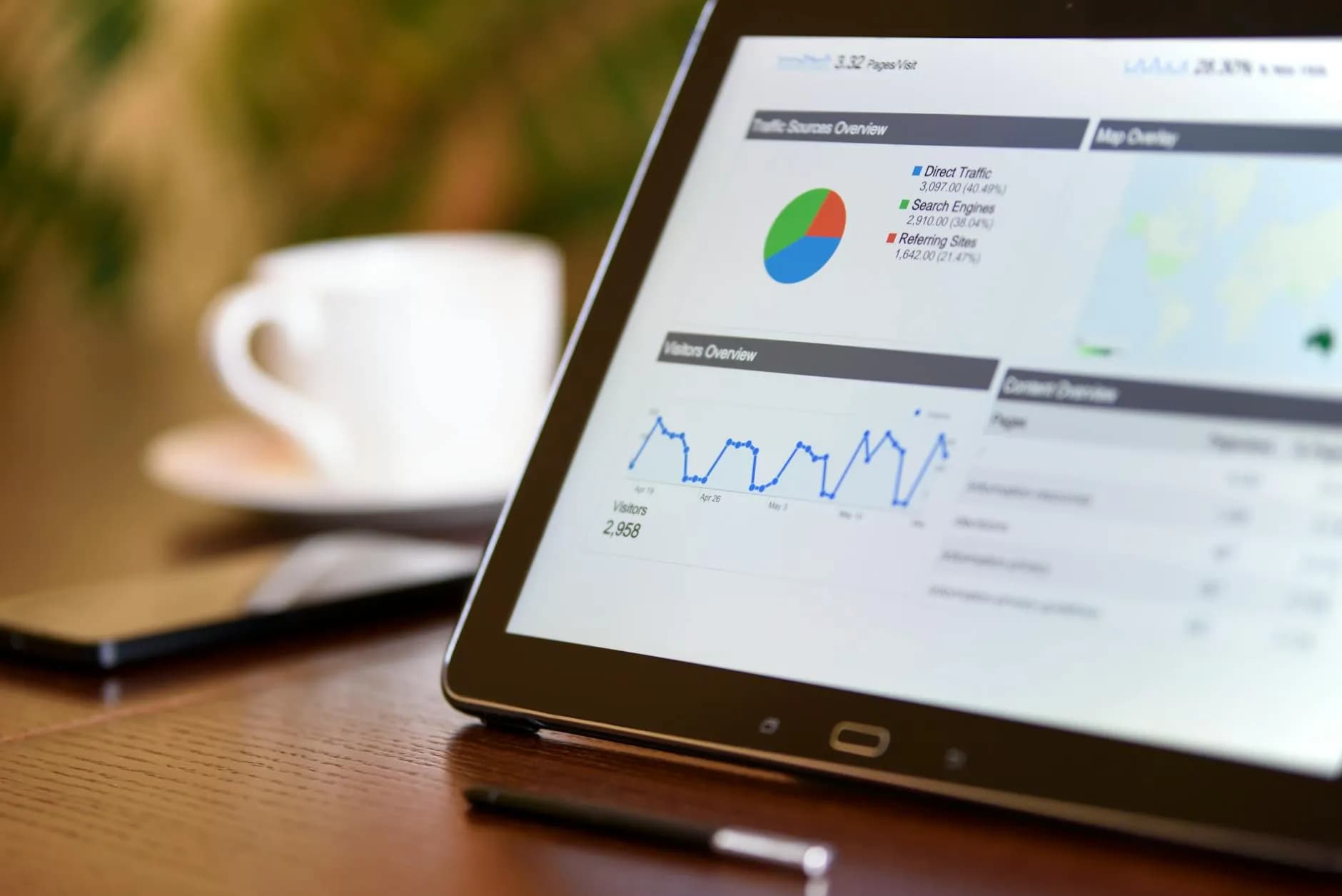
Foto von Mikael Blomkvist · Pexels
Understanding the Fundamental Difference: Intent vs Interest
The most important distinction between Google Ads and Facebook (Meta) Ads is not about features, targeting options, or ad formats. It is about where the user sits in their decision-making process when they encounter your ad. Google Ads captures demand — it puts your business in front of people who are actively searching for what you sell. When someone types “emergency plumber near me” or “best CRM for small business,” they have already identified a need and are looking for a solution. Your ad meets them at the moment of intent.
Meta Ads creates demand, it puts your business in front of people who match your ideal customer profile but are not actively searching for your product. They are scrolling through their feed, watching Reels, or messaging friends when your ad interrupts their experience with a compelling offer. The user had no purchase intent before seeing your ad, but your creative, targeting, and offer can generate interest from scratch. This is fundamentally different from capturing existing demand, and it requires a different strategic approach.
Neither platform is inherently better than the other. They serve different stages of the buyer’s journey and solve different marketing problems. Understanding this distinction is the key to allocating your digital advertising budget effectively. Businesses that treat both platforms identically, running the same creative, targeting, and landing pages on both, consistently underperform those that tailor their strategy to each platform’s strengths.
Google Ads Strengths for Small Businesses
Google Ads excels when your product or service addresses a known problem that people actively search for. Service businesses, plumbers, lawyers, dentists, accountants, home cleaners, typically see their highest return on ad spend from Google Search campaigns because their customers are looking for immediate solutions. When someone searches “dentist accepting new patients,” they are ready to book an appointment today. A well-optimized Google Search ad with a compelling headline, relevant extensions, and a fast landing page can convert these high-intent clicks at 5–15% depending on the industry.
Google’s Performance Max campaigns, introduced in recent years, use machine learning to distribute your ads across Search, Display, YouTube, Gmail, Maps, and Discover from a single campaign. For small businesses with limited time to manage multiple campaign types, Performance Max simplifies management while maximizing reach. The trade-off is reduced control over placement and audience targeting, but Google’s algorithm has become remarkably effective at finding converting audiences when given sufficient conversion data.
The transparency of Google Ads is another significant advantage. You can see exactly which search terms triggered your ads, how much each click cost, and which keywords are driving conversions versus wasting budget. This granularity allows you to continuously refine your campaigns, pausing underperforming keywords and doubling down on winners. For businesses with tight budgets, this level of control is invaluable, you know precisely where every dollar goes and what it produces.
Facebook and Meta Ads Strengths
Meta Ads shines in three scenarios: building brand awareness, promoting visually compelling products, and reaching audiences who do not yet know they need your product. The platform’s targeting capabilities are built on behavioral and interest data rather than search intent. You can target users based on demographics, interests, behaviors, life events, job titles, and lookalike audiences modeled from your existing customers. This allows you to build custom audiences with remarkable precision.
The creative flexibility of Meta Ads is unmatched. You can run single images, carousels, videos, Stories, Reels, instant experiences, and lead forms, each optimized for different objectives and placements. For e-commerce businesses, dynamic product ads automatically show users the specific products they viewed on your website, driving retargeting conversions at scale. For service businesses, video testimonials and before-and-after carousels build trust and emotional connection in ways that text-based search ads cannot.
Meta’s Advantage+ campaigns and broad targeting have transformed how advertisers approach the platform in 2026. Instead of building hyper-specific audience segments, the most effective strategy is now to give Meta’s algorithm wide latitude to find converting users while controlling outcomes through creative quality and landing page optimization. This shift rewards businesses with strong creative assets and clear value propositions over those who relied on narrow targeting to compensate for mediocre ads. Invest in your social media creative, and Meta’s algorithm will reward you with lower costs and broader reach.
Cost Comparison by Industry
Cost per click on Google Ads varies enormously by industry and keyword competitiveness. Legal keywords like “personal injury lawyer” can exceed $150 per click, while local service keywords like “house cleaning near me” might cost $3–8 per click. The average cost per click across all industries on Google Search is approximately $4.66 in 2026, but averages are misleading — your actual CPC depends on your Quality Score, bid strategy, competition level, and geographic targeting.
Meta Ads typically delivers lower cost per click, averaging $1.50–2.50 across industries, but the clicks are fundamentally different in quality. A Google Search click represents someone actively looking for your service. A Meta click represents someone whose attention you captured mid-scroll. Conversion rates on Google Search are typically 3–5x higher than Meta, which often equalizes the cost per conversion despite the lower CPC. The metric that matters is cost per acquisition (CPA), not cost per click.
For a meaningful comparison, calculate your CPA on each platform using at least 90 days of data and a minimum of 50 conversions per platform. We have seen industries where Google delivers a CPA of $45 compared to Meta’s $120, and industries where Meta delivers a CPA of $22 compared to Google’s $85. There is no universal winner, the answer depends on your industry, audience, offer, and creative quality. The only way to know is to test both with sufficient budget and duration.
When to Use Google Ads
Google Ads should be your primary platform when your customers are actively searching for your product or service. This is almost always the case for service-based businesses (legal, medical, home services, financial), B2B companies selling to buyers who research solutions via search, and local businesses targeting customers within a specific geography. If someone can type a phrase into Google that perfectly describes what you sell, Google Ads is where you start.
Google Ads also dominates for high-ticket, considered purchases where the buyer undergoes a research phase. Enterprise software, luxury goods, professional services, and major home improvements all fit this profile. These buyers are comparing options, reading reviews, and evaluating providers over days or weeks. Google Ads places you in front of them at each stage of this journey, from informational queries early in the funnel to transactional queries at the bottom.
Choose Google Ads when you need measurable, attributable results quickly. Because Google captures existing demand, well-optimized campaigns can generate leads within the first week. This immediacy makes Google Ads ideal for businesses that need to validate a new market, test pricing, or fill a sales pipeline quickly. The downside is that you are limited by search volume, if only 500 people per month search for your keyword in your area, that is your ceiling regardless of budget.
When to Use Meta Ads
Meta Ads is the right choice when your product is visually compelling, emotionally driven, or solves a problem the customer does not yet realize they have. Fashion, beauty, food, fitness, home decor, and subscription boxes thrive on Meta because the product sells itself through imagery and video. If your best marketing asset is a stunning photo or a 15-second video that stops the scroll, Meta will outperform Google every time.
Meta is also superior for building brand awareness and top-of-funnel demand generation. If you are launching a new product, entering a new market, or trying to expand beyond your existing customer base, Meta’s ability to reach millions of targeted users at low CPMs is unmatched. A video view campaign on Meta can deliver brand exposure at $0.01–0.03 per view, building familiarity that converts into search volume, direct traffic, and word-of-mouth over time.
Retargeting is another area where Meta excels. Using the Meta Pixel and Conversions API, you can build audiences of people who visited specific pages on your website, added items to their cart, or engaged with your social content. Retargeting these warm audiences with tailored creative, a discount for cart abandoners, a testimonial for page visitors, a case study for blog readers, converts at 3–5x the rate of cold prospecting. Even if Google is your primary acquisition channel, Meta retargeting should be part of your strategy.
Combining Both Platforms
The most effective advertising strategies do not choose between Google and Meta, they use both platforms in a coordinated system. Google captures the demand you create. Meta creates the demand that Google captures. This flywheel effect is measurable: businesses running Meta awareness campaigns consistently see branded search volume on Google increase by 20–40% within 60 days. That branded search traffic converts at a higher rate and lower cost than generic search traffic.
Build a full-funnel system by assigning each platform a role. Use Meta for top-of-funnel awareness (video views, engagement) and mid-funnel consideration (traffic to educational content, lead magnets). Use Google for bottom-of-funnel conversion (search ads targeting high-intent keywords, remarketing lists for search ads). Use Meta again for post-purchase retention (upsell campaigns, loyalty offers, review requests). Each platform does what it does best, and the customer experiences a smooth journey from discovery to purchase.
Attribution becomes critical when running both platforms simultaneously. Both Google and Meta will claim credit for the same conversion if the user interacted with both before converting. Use a third-party attribution tool or Google Analytics 4’s data-driven attribution model to understand the true contribution of each platform. Without proper attribution, you risk over-investing in the platform that takes credit and under-investing in the platform that creates the opportunity.
Budget Allocation Strategy
For small businesses with a monthly ad budget under $3,000, we generally recommend starting with one platform rather than splitting budget too thin across both. If your business addresses a problem people actively search for, start with Google Search and allocate 100% of budget there until you have a profitable campaign generating consistent leads. Once Google is optimized and you have headroom in your budget, introduce Meta for retargeting first (typically $300–500/month), then expand into prospecting as budget allows.
For budgets between $3,000 and $10,000 per month, a 60/40 or 70/30 split is typical. The dominant platform depends on your business model. Service businesses usually weight toward Google (70/30), while e-commerce businesses often weight toward Meta (60/40). Test aggressively during the first 90 days, shifting budget toward whichever platform delivers a lower cost per acquisition. Be prepared to change the allocation monthly based on performance data rather than locking into a fixed ratio.
Regardless of budget size, never allocate less than $1,000 per month to a platform. Below that threshold, you generate too few clicks and conversions for the algorithms to optimize effectively, and you lack the statistical significance to make informed decisions. If your total budget cannot support both platforms at $1,000+, pick one and do it well. A focused $2,000 Google campaign will outperform a scattered $1,000 Google plus $1,000 Meta split every time. Contact us for a personalized budget allocation recommendation based on your industry, goals, and competitive landscape.
Bereit, Ihr Online-Geschäft auszubauen?
Sprechen Sie mit unserem Team über Ihr Projekt. Kostenlose Beratung, keine Verpflichtung.
Kostenlose Beratung