
Mobilapp vs mobilwebsite: hvad små virksomheder virkelig har brug for
De fleste små virksomheder behøver ikke en native app. Her er en ærlig sammenligning af mobilapps, responsive websites og progressive webapps.
Marketingteam · 16. marts 2026
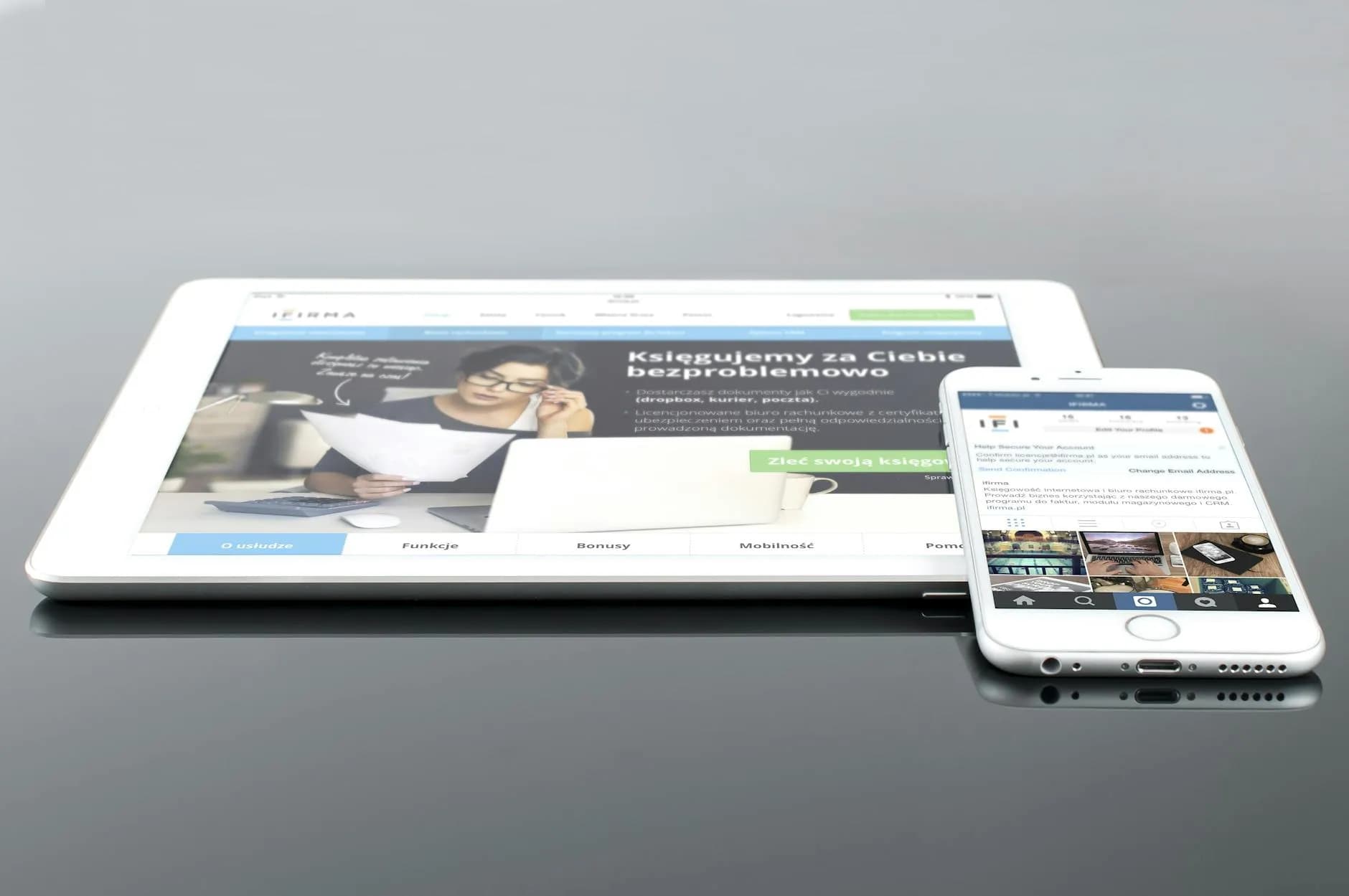
Foto af Torsten Dettlaff · Pexels
The Mobile Landscape in 2026
Mobile devices account for nearly 70% of global web traffic in 2026, and the average smartphone user has over 80 apps installed but actively uses fewer than 10 per week. This disparity is the core tension in the mobile-app-versus-mobile-website debate: while apps offer superior engagement for the products people use daily, the vast majority of digital interactions happen through the browser. Understanding which category your business falls into is essential to making the right investment.
The technology landscape has shifted significantly in the past two years. Responsive web design has matured to the point where well-built mobile websites are nearly indistinguishable from native apps in terms of visual quality and interaction speed. At the same time, frameworks like React Native, Flutter, and Kotlin Multiplatform have reduced the cost and complexity of native app development. Progressive Web Apps (PWAs) have emerged as a genuine middle ground, offering app-like features through the browser without requiring a download from an app store.
For small and medium businesses, the question is rarely "should we have a mobile presence?" — the answer is unequivocally yes. The real question is what form that mobile presence should take. The wrong choice wastes budget, the right choice accelerates growth. This guide breaks down the trade-offs so you can make an informed decision based on your specific business model, audience, and goals.
What Mobile Websites Do Well
Mobile websites excel at reach. Anyone with a browser can access your site instantly, but no download, no app store approval, no storage space required. This zero-friction access makes mobile websites the superior choice for businesses whose primary goal is attracting new visitors: restaurants, service providers, retail stores, content publishers, and any business that relies on search engine traffic. Google indexes mobile websites but does not index app content (with limited exceptions), which means a mobile website is your primary tool for organic discoverability.
Mobile websites are also dramatically easier and cheaper to maintain than native apps. You have a single codebase that works across all devices, operating systems, and screen sizes. Updates deploy instantly without requiring users to download new versions. A/B testing, analytics, and conversion optimization can be implemented with standard web tools. Our responsive website design approach ensures that every site we build delivers a polished experience across the entire device spectrum, from the smallest phone to the largest desktop monitor.
From a cost perspective, a well-built responsive website typically runs 40–70% less than building even a single-platform native app. When you factor in the need to support both iOS and Android, the cost advantage of a mobile website becomes even more pronounced. For businesses that do not require device-level features like push notifications, camera access, or offline functionality, a mobile website delivers the best value per dollar spent.
What Native Apps Do Well
Native apps shine when engagement, retention, and repeated use are the primary objectives. Apps live on the user's home screen, enabling one-tap access and push notification delivery that drives repeat engagement at rates web cannot match. The average retention rate for apps with push notifications enabled is 3–4x higher than for mobile web experiences. For businesses whose model depends on daily or weekly interaction, fitness, banking, social, task management, messaging, a native app is worth the investment.
Performance is another area where native apps maintain an advantage, particularly for graphics-intensive or computationally demanding applications. Games, video editing tools, augmented reality experiences, and real-time data visualization all benefit from direct access to device hardware that the browser cannot fully replicate. Native apps also integrate directly with device features like the camera, GPS, biometric authentication, contacts, and calendar, enabling experiences that feel deeply embedded in the user's mobile ecosystem.
App stores provide a distribution and monetization channel that the web does not offer in the same way. The Apple App Store and Google Play Store handle payments, subscriptions, and in-app purchases with built-in infrastructure that users already trust. For products that monetize through subscriptions or microtransactions, app store distribution simplifies the billing relationship, though it comes at the cost of a 15–30% revenue share. Our mobile application development service helps businesses navigate these trade-offs and build apps that justify their presence on users' home screens.
Cost Comparison: App vs Responsive Site
A high-quality responsive website for a small business typically costs $5,000–$15,000 to build and $100–$300 per month to maintain. A single-platform native app (iOS or Android) starts at $25,000–$50,000 and can easily exceed $100,000 for feature-rich applications. Supporting both platforms roughly doubles the development cost if building natively, though cross-platform frameworks can reduce this to a 1.3–1.5x multiplier. Annual maintenance for apps typically runs $5,000–$20,000 due to OS update compatibility, app store compliance, and device fragmentation.
The cost difference is not just in initial development. Apps require ongoing investment in app store optimization (ASO), user acquisition campaigns, and store listing maintenance. Users must be convinced to download the app, which adds a friction point that does not exist with web traffic. The average cost to acquire a mobile app user through paid campaigns in 2026 ranges from $2–$5 for Android to $3–$7 for iOS, which can make user acquisition a significant ongoing expense.
Return on investment should drive the decision, not upfront cost alone. If your app generates $50 in monthly revenue per active user and retains users for an average of 12 months, the $600 lifetime value easily justifies a $5 acquisition cost and a substantial development budget. Conversely, if your business model does not involve repeated transactions or high customer lifetime value, the same budget spent on a superior mobile website and paid search campaigns will almost certainly deliver better returns.
When a Responsive Website Is Enough
For the majority of small businesses, a responsive website is the right answer. If your primary goals are being found online, presenting your services, generating leads, and enabling basic transactions, a website handles all of these without the overhead of app development. Restaurants, law firms, medical practices, consultancies, real estate agencies, and retail stores with straightforward product catalogs all fall into this category.
E-commerce businesses with fewer than 500 SKUs and moderate order volumes are also well-served by responsive websites. Modern e-commerce platforms deliver checkout experiences on mobile web that rival native apps, with support for Apple Pay, Google Pay, and saved payment methods eliminating the historical friction advantage that apps once held. Unless your e-commerce model involves frequent repeat purchases, loyalty programs with real-time notifications, or AR product visualization, a mobile website is the pragmatic choice.
Content businesses, blogs, news outlets, directories, resource libraries, should almost always prioritize their mobile website over an app. Content discovery happens through search engines and social media, both of which link to web URLs, not app screens. Building an app creates a walled garden that most users will never enter. Invest the development budget in making your mobile web experience exceptionally fast, readable, and engaging instead.
When You Actually Need an App
You need a native app when your product requires capabilities that the mobile web cannot deliver. Offline functionality for field workers, real-time GPS tracking for delivery services, background audio playback for music or podcast platforms, and complex gesture-based interfaces for creative tools are all legitimate reasons to build native. If the core user experience degrades meaningfully without device-level access, an app is not optional.
You also need an app when your business model depends on habitual engagement. If users need to interact with your product daily or multiple times per week — think banking, fitness tracking, project management, or social networking, the home screen presence and push notification capabilities of a native app drive engagement that a mobile website cannot replicate. The benchmark here is simple: if users would voluntarily add your app to their home screen and use it multiple times per week, an app is worth building.
Marketplace and on-demand service businesses often benefit from apps because both sides of the marketplace, providers and consumers, need real-time communication, location services, and transaction management. Ride-sharing, food delivery, home services, and freelance marketplaces all demand the responsiveness and device integration that native apps provide. If your business connects people in real time, an app is typically the right investment.
The PWA Middle Ground
Progressive Web Apps (PWAs) blur the line between websites and native apps. A PWA is a website built with modern web technologies that can be "installed" on a user's home screen, work offline through service workers, send push notifications (on Android and, with limitations, on iOS), and load instantly from cache. Companies like Starbucks, Pinterest, and Uber have used PWAs to deliver app-like experiences to users who would not download a native app.
PWAs are compelling for businesses that need some app-like features but cannot justify the cost of native development. An e-commerce store with a PWA can offer offline browsing of the product catalog, push notifications for order updates, and an immersive full-screen experience, all without the app store. A service business can use a PWA to provide instant access to appointment booking, invoices, and project status from the home screen. The development cost is typically 20–40% more than a standard responsive website but 50–70% less than a native app.
The primary limitation of PWAs in 2026 remains iOS support. While Apple has made progress, PWA push notifications on iOS still lag behind Android in reliability and capability. Background processing, Bluetooth access, and certain hardware integrations are also unavailable to PWAs. If your audience skews heavily toward iPhone users and push notifications are central to your engagement strategy, a native iOS app may still be necessary. For businesses with a mixed or Android-leaning audience, PWAs offer an outstanding balance of capability and cost.
Making the Decision
Start with your users, not the technology. Map out the top five actions your customers take on mobile, the frequency of those interactions, and the device features each action requires. If all five actions can be accomplished in a browser, build a great mobile website. If three or more require native capabilities or depend on habitual, push-driven engagement, build an app. If the answer is mixed, a PWA may be the optimal path forward.
Do not build an app because your competitors have one or because your stakeholders think it sounds impressive. Build an app because the data shows that your users need it and will use it regularly enough to justify the investment. Some of the most successful digital businesses in the world, including many SaaS products, operate primarily through mobile web and have deliberately chosen not to build native apps because the economics do not support it.
At GRADAX, we help businesses make this decision with clear-eyed analysis rather than technology bias. Whether you need a responsive website, a native mobile application, or a PWA that bridges the two, we start by understanding your users and your goals, then recommend the solution that delivers the strongest return. Reach out to our team to discuss what the right mobile strategy looks like for your business.
Klar til at vokse din onlinevirksomhed?
Tal med vores team om dit projekt. Gratis konsultation, ingen forpligtelse.
Gratis Konsultation